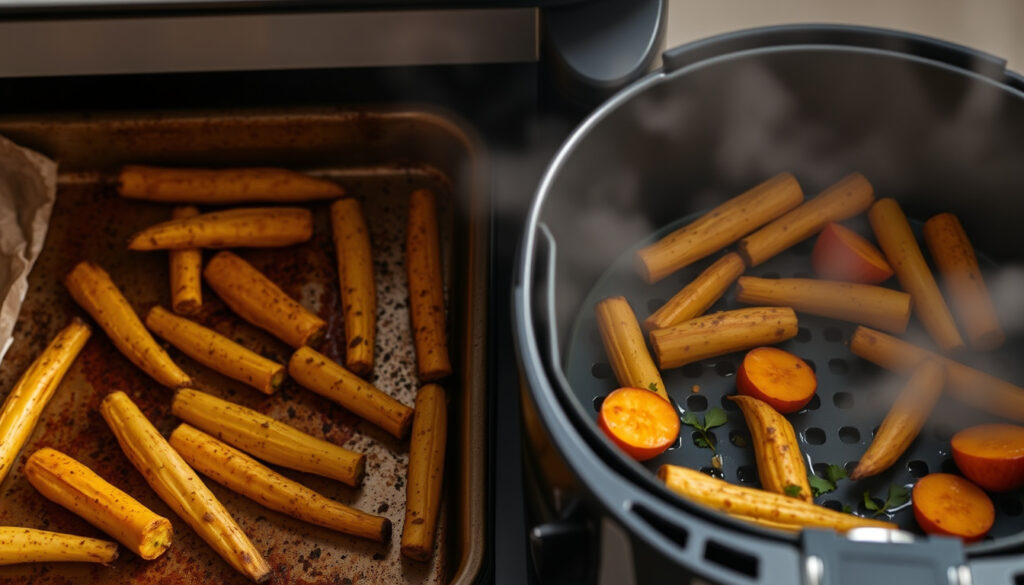
How to Roast Parsnips – Crispy Oven and Air Fryer Guide
Parsnips transform into something exceptional when roasted, their natural sweetness deepened by caramelisation and their texture becoming tender within while developing a beautifully crisp exterior. Whether served alongside a traditional Sunday roast or as part of a vegetarian centrepiece, mastering the art of roasting parsnips opens up a world of comforting, flavourful possibilities that suit both everyday cooking and special occasions.
This guide covers the essential techniques for achieving perfectly roasted parsnips every time, from selecting and preparing your vegetables through to the final touches that make all the difference. The methods work equally well for a simple weeknight side dish or an elaborate dinner party contribution.
How to Roast Parsnips in the Oven
These timings provide a framework for achieving well-roasted parsnips. Adjustments may be necessary based on the size of your pieces and the characteristics of your particular oven.
Begin by preheating your oven to 200°C (400°F) with a large roasting tin inside to heat up. While the oven heats, peel the parsnips and cut them into even-sized pieces, roughly matching the size of large chips or wedges. Larger pieces take longer to cook through, while thinner pieces risk burning before tenderising.
Parboiling the parsnips for approximately 5 minutes before roasting makes a significant difference to the final texture. This preliminary cooking softens the centre while the brief blast of high oven heat later creates that sought-after crispy exterior. According to cooking enthusiasts, this two-stage approach yields results that are difficult to achieve through roasting alone.
- Parboiling draws out natural sugars, which then caramelise beautifully during roasting
- Cutting pieces uniformly ensures even cooking throughout the batch
- Scoring or halving thick parsnips lengthwise helps them cook more evenly
- Using a hot roasting tin from the start creates immediate sizzling contact
- Generous oil coating promotes browning and prevents sticking
- Shaking or turning the parsnips halfway through cooking guarantees uniform colour
- Arranging pieces with space between them, rather than crowding, produces superior results
| Temperature | Method | Total Time |
|---|---|---|
| 180°C fan | Standard roast | 35-40 minutes |
| 200°C / 400°F | High heat roast | 25-30 minutes |
| 180°C | Air fryer | 15-20 minutes |
| 200°C / 390°F | Air fryer quick method | 15-18 minutes |
| 200°C / 390°F | Air fryer with parboil | 40 minutes total |
| 180°C | BBC Good Food method | 30-35 minutes |
How Long to Roast Parsnips
The total roasting time depends primarily on two factors: the temperature of your oven and the size of your parsnip pieces. Professional recipes generally recommend 180°C to 200°C for standard oven roasting, with smaller pieces requiring less time.
At 200°C (400°F), expect approximately 25 to 30 minutes of roasting time if starting with parboiled pieces. The higher temperature accelerates browning, so keeping a watchful eye during the final stages prevents the exterior from darkening too much before the interior becomes tender. The BBC Good Food approach suggests a slightly longer 30 to 35 minutes at 180°C, allowing for more gentle and even cooking throughout.
Understanding Your Oven
Fan ovens typically cook faster than conventional ovens, sometimes requiring a temperature reduction of around 20°C to achieve comparable results. Convection heat circulates throughout the cavity, transferring energy to the food more efficiently. This means parsnips may brown more quickly on the outside while taking longer to soften in the centre if the pieces are thick.
Opening the oven door to turn or shake the parsnips causes a significant temperature drop, so perform this action quickly and close the door immediately afterwards. Each opening can add several minutes to the overall cooking time as the oven recovers to its set temperature.
How to Make Crispy Roast Parsnips
Dry the parsnip pieces thoroughly after parboiling. Any remaining moisture creates steam, which softens the exterior rather than crisping it. A quick toss on kitchen paper before proceeding to the hot oven makes a measurable difference.
Achieving genuinely crispy parsnips requires managing moisture throughout the cooking process. The Maillard reaction, responsible for that golden-brown crust, needs dry surfaces to work effectively. When sugars and amino acids meet on a wet surface, they steam rather than caramelise.
Double roasting produces exceptional results for those seeking restaurant-quality crispiness. Roast the parboiled pieces for 15 to 20 minutes, remove them from the oven, let them steam dry for a moment, then return them to the oven for another 10 to 15 minutes at a slightly higher temperature. This rest period between roasting phases allows excess moisture to escape.
Another technique involves coating the parsnips in a thin layer of bicarbonate of soda before roasting. This alkaline treatment raises the surface pH, promoting more rapid browning and creating an exceptionally crisp crust. Only a very light dusting is needed, as too much affects the flavour negatively.
Common Crispiness Mistakes
Overcrowding the roasting tin ranks among the most frequent errors. Crowded pieces steam each other as their moisture escapes, resulting in soft rather than crispy exteriors. Using two tins or cooking in batches, though requiring more effort, genuinely transforms the outcome.
Insufficient oil leaves the surface dry and prone to burning before proper caramelisation occurs. A generous coating, roughly 2 to 3 tablespoons of oil for 500g of parsnips, ensures each piece has enough fat to brown evenly without becoming greasy.
How to Roast Parsnips and Carrots
Combining parsnips with carrots creates a visually appealing and nutritionally balanced side dish. Both vegetables share similar cooking characteristics, making them natural partners for simultaneous roasting. Thicker carrot pieces take slightly longer than thinner ones, so cutting them to match the parsnip size ensures everything finishes cooking together.
A honey and herb combination works particularly well with this pairing. Toss the prepared vegetables in olive oil, season with salt and pepper, then drizzle over honey during the final 10 minutes of roasting. Thyme and rosemary sprigs scattered among the vegetables release their aromatic oils as they roast, infusing the entire dish with fragrant warmth.
For a more substantial dish, adding quartered potatoes or sweet potato chunks creates a complete roasted vegetable medley. These starchier vegetables require similar cooking times to parsnips, making timing adjustments unnecessary. Simply prepare all vegetables to similar sizes and roast together.
Seasoning Combinations
Classic combinations include garlic and lemon zest for brightness, maple syrup and walnut oil for richness, or harissa and cumin for warmth and spice. Each option brings a distinct character to the vegetables, allowing the dish to complement different main courses throughout the year.
A sprinkle of Parmesan cheese during the final minutes of roasting adds umami depth and creates crispy, golden edges that many find irresistible. This technique works especially well when the vegetables are arranged in a single layer, allowing maximum contact with the hot baking tray.
Roast Parsnips in an Air Fryer
Air fryers vary significantly in their heat output and fan speed. The timings provided serve as starting points rather than precise guarantees. Check your parsnips a few minutes before the suggested time and adjust accordingly for subsequent batches.
Air fryers offer a convenient alternative to oven roasting, producing crispy results with significantly less cooking time. The rapid air circulation within these appliances creates the dry, hot environment necessary for caramelisation, often achieving crispy exteriors in half the time of conventional oven methods.
The quick method, suitable for those short on time, involves preheating the air fryer to 200°C for approximately 5 minutes before adding the prepared parsnips. Toss them with honey, olive oil, and seasoning, then arrange in a single layer in the basket. Cooking at 180°C for 15 to 18 minutes produces golden-brown results with crispy edges and tender centres.
For exceptionally soft interiors with crispy exteriors, the parboil method extends the total time to around 40 minutes but delivers superior texture. Parboil the pieces for 20 minutes, then air fry at 200°C for 10 minutes with oil and seasoning. Toss with honey and continue for another 10 minutes until beautifully caramelised.
Air Fryer Best Practices
Never overcrowd the air fryer basket. Doing so restricts air circulation and creates steam rather than the dry heat needed for crispy results. Working in batches, though slower, ensures each piece browns evenly without becoming soggy or soft.
Shake the basket or use tongs to turn the pieces halfway through cooking. This simple action exposes all surfaces to the heating element, preventing uneven browning. Larger pieces may need a few extra minutes while thinner cuts should be monitored to avoid burning.
Honey Roast Parsnips Recipe
Honey roast parsnips represent a beloved British Christmas tradition, their sweet, sticky glaze complementing the richness of roast turkey or nut roast equally well. The addition of honey accelerates caramelisation, meaning these require less time than plain roasted versions.
Begin with 750g of parsnips, peeled and cut into chunky pieces. Parboil for 20 minutes until just beginning to soften, then drain and shake to roughen the edges slightly. This rough texture provides more surface area for the honey glaze to cling to, maximising the caramelisation effect.
Transfer the parboiled parsnips to a hot roasting tin coated generously with oil. Roast at 200°C for 10 minutes, then drizzle with 2 tablespoons of honey and toss to coat. Return to the oven for another 10 to 15 minutes until the glaze turns deep golden and sticky. Watch carefully during this final stage, as the honey can burn quickly.
Recipe Variations
Maple syrup offers a deeper, more complex sweetness compared to honey, with notes of caramel and vanilla that pair wonderfully with the earthy parsnip flavour. Agave nectar provides a milder sweetness that lets the parsnip taste shine through more prominently.
Adding orange zest and juice alongside the honey creates a bright, festive version ideal for winter celebrations. A splash of cider vinegar added just before serving cuts through the sweetness and adds sophisticated depth to the dish.
Step-by-Step Method Timeline
Understanding the sequence of stages helps home cooks plan their time effectively and ensures everything comes together at the right moment for serving.
- Preparation (10 minutes): Peel and cut parsnips into even-sized pieces. Preheat oven to 200°C or prepare air fryer.
- Parboiling (5-20 minutes): Cook in boiling salted water. Skip this step for softer results or include for crispier exteriors.
- Seasoning (2 minutes): Toss parboiled pieces with oil, salt, and any additional seasonings. Spread on hot roasting tin.
- Initial roast (15-20 minutes): Cook at high temperature without disturbance to encourage browning.
- Turning (1 minute): Shake tin or use tongs to turn pieces, ensuring even cooking and colour development.
- Final roast (10-15 minutes): Continue until golden and crispy. Add honey or glaze if using during this phase.
- Resting (2-3 minutes): Allow to cool slightly before serving, as the glaze sets and intensifies during this time.
Additional Tips and Techniques
Selecting the right parsnips matters more than many realise. Look for firm, smooth specimens without soft spots or excessive branching. Smaller to medium parsnips tend to be sweeter, as the sugars concentrate as the root grows. Very large parsnips can become woody in their centres, which nothing fully resolves during cooking.
Storing leftover roasted parsnips requires cooling them quickly and refrigerating within two hours. They keep well in an airtight container for up to three days. Reheating works best in a hot oven or air fryer for 5 to 8 minutes, as the microwave tends to make them soft rather than restoring crispiness.
Parboiling serves a practical purpose beyond softening. The process draws out natural sugars from the parsnip cells, which then concentrate on the surface during roasting. These concentrated sugars caramelise more readily, creating that characteristic golden-brown crust that distinguishes excellent roast parsnips from merely acceptable ones.
For those following specific dietary requirements, parsnips naturally suit vegan and vegetarian diets. Swapping butter for olive oil or coconut oil maintains the roasting results while keeping the dish plant-based. Adding spices like smoked paprika, cumin, or coriander creates interesting flavour profiles without compromising the cooking process.
Serving Suggestions
Roasted parsnips complement an extensive range of dishes beyond the traditional roast dinner. They work beautifully alongside roasted chicken, pan-seared fish fillets, or hearty bean cassoulets. The sweetness balances rich, savoury mains while their texture provides welcome contrast to smoother components.
Crumbled crisped pancetta or bacon scattered over the top adds salty, smoky notes that harmonise with the honey glaze. Fresh herbs such as flat-leaf parsley or thyme stirred through at the end introduce brightness and colour. A squeeze of lemon juice just before serving lifts the overall richness.
For a lighter approach, serve roasted parsnips atop a bed of salad leaves with a simple vinaigrette. The warm vegetables wilt the greens slightly, creating an interesting contrast of temperatures and textures. This unexpected combination works surprisingly well for lunch or a starter course.
Sources and Further Reading
Professional cooking guidance emphasises that achieving consistent results with roasted vegetables requires understanding how your particular oven performs. Ovens vary considerably in their actual temperatures versus their settings, and getting to know these characteristics over time transforms cooking outcomes significantly.
— BBC Good Food
The BBC Good Food method provides reliable, tested timings that work across most domestic ovens. Their approach of roasting at 180°C with the addition of honey during the final phase has become a widely adopted standard in British home cooking.
Cooking blogs and recipe sites offer numerous variations on the basic technique. Some swear by the parboiling method for guaranteed crispiness, while others prefer the convenience of a single roasting stage. Experimenting with both approaches reveals which suits your preferences and equipment best.
Bringing It All Together
Mastering roast parsnips comes down to understanding a few core principles: achieving the right balance between tender interior and crispy exterior, managing cooking times according to your equipment and preferences, and applying the finishing touches that elevate a simple side dish into something memorable. Whether using a conventional oven or an air fryer, the techniques remain fundamentally consistent.
Practise makes perfect with this particular skill. The first attempt may require adjustment for your specific oven or air fryer model, but subsequent batches will yield increasingly predictable results. Once confident with the basic method, exploring variations such as honey glazing, herb combinations, or mixed vegetable roasts opens up an entire repertoire of delicious possibilities.
For those interested in Frozen Jacket Potato in Air Fryer, similar air fryer techniques apply, demonstrating how these appliances excel at transforming frozen or pre-prepared ingredients into appealing dishes with minimal effort.
Frequently Asked Questions
How do you cook parsnips?
Parsnips can be boiled, steamed, roasted, or mashed. Roasting, particularly after a brief parboil, produces the best texture and flavour for most occasions.
What is the best roast parsnips recipe?
The most reliable approach involves parboiling for 5 to 20 minutes, then roasting at 200°C for 25 to 30 minutes with generous oil and seasoning. Adding honey during the final 10 minutes creates a popular glaze.
Do you need to parboil parsnips before roasting?
Parboiling improves the final texture by drawing out sugars that later caramelise. Skipping this step produces softer results but still yields edible parsnips.
Can you roast parsnips from frozen?
Fresh parsnips work best for roasting. Frozen parsnips become too watery when thawed, preventing proper caramelisation. If using frozen, thaw completely and pat dry thoroughly before roasting.
What temperature should parsnips be roasted at?
Temperatures between 180°C and 200°C work well. Higher temperatures produce faster browning but require closer monitoring to prevent burning.
How do you make parsnips crispy?
Ensure the surface is completely dry before roasting, use sufficient oil, maintain proper spacing between pieces, and consider the parboil-and-roast method for guaranteed crispiness.
Can you add carrots to parsnips when roasting?
Yes, carrots and parsnips roast well together. Cut both to similar sizes for even cooking and consider complementary seasonings like honey, thyme, or orange.
More related posts
 Houses for Sale Clydebank: Types, Prices & Buyer Guide
 Archive of Our Own – What It Is, How to Use and Safety Guide
 When Do Babies Start Teething – Timeline, Signs and Stages
 Dwp 780 Benefits Extra Payment – Clear Eligibility Guide
 Galaxy A71 To Buy – Affordable Practical Option
 Best Basketball Shoes: Top Picks, Buying Guide & Comparisons
 1.78 m in Feet – Precise Conversion Guide and Insights
 Prince Andrew, Duke of York – Epstein Scandal Facts and Status