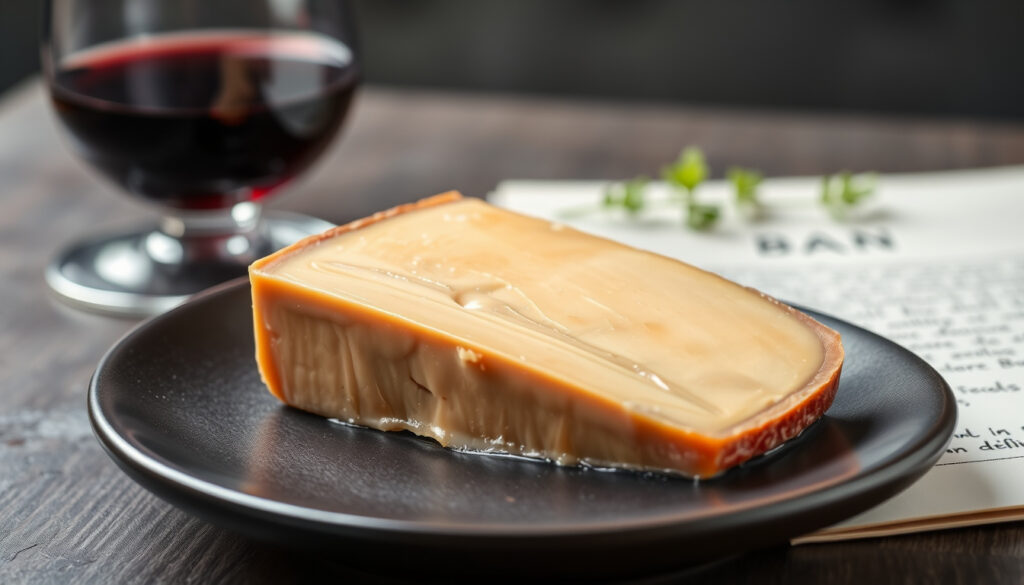
What Is Foie Gras? Taste, Health, and Global Bans
Few foods inspire as much fascination and friction as foie gras. This French delicacy is prized for its buttery richness yet condemned for the force-feeding practice that swells the bird’s liver to seven times its normal size in just two weeks.
Force-feeding period: 12–15 days ·
Liver weight: 550–982 g ·
Fat content: 55.8%
Quick snapshot
- Foie gras is the fatty liver of a duck or goose, produced by force-feeding (PMC review on foie gras production).
- The liver reaches 7–10 times its normal size during production (PMC review).
- France remains the leading producer and consumer (European Journal video report).
- Long-term human health effects of regular consumption aren’t well studied.
- Whether existing EU welfare rules effectively prevent suffering.
- The future direction of bans: more restrictions or possible reversals.
- Ancient Egypt: early force-feeding of geese documented (PMC review).
- 18th century: foie gras enters French haute cuisine (PMC review).
- 2006: UK bans production (L214 briefing).
- 2012: California ban takes effect (L214 briefing).
- 2023: New York City ban enacted (later overturned) (L214 briefing).
- More countries may follow with production bans or import restrictions. (Max Planck Society)
- Alternatives (e.g., plant-based foie gras) are being researched (Max Planck Society).
- Legal challenges to existing bans in the US continue. (Max Planck Society)
Here are the essential details about foie gras’s origins, ingredients, and production.
| Attribute | Details |
|---|---|
| Origin | Modern production refined in France; force-feeding known in ancient Egypt (PMC review). |
| Main ingredient | Liver of duck (common) or goose (premium) (L214 briefing). |
| Production method | Gavage – force-feeding corn mash twice daily for 12–15 days (ducks; PMC review). |
| Flavor profile | Rich, buttery, delicate, slightly sweet (HSUS Report). |
| Legal status (global) | Production banned in several countries; import and sale often still legal (Max Planck Society). |
What is foie gras?
Foie gras is the enlarged liver of a duck or goose that has been force-fed through a process called gavage. The term literally means “fatty liver” in French. The European Commission defines foie gras as products derived exclusively from force-fed ducks and geese (European Commission scientific opinion).
What is foie gras made of?
It is simply the liver of the bird, which becomes engorged with fat during the feeding period. The final product contains about 55.8% fat (PMC review).
What is foie gras called in English?
English speakers typically use the French name “foie gras.” Occasionally it is called “fatty liver,” but that term is rare in culinary contexts.
How do you pronounce foie gras?
The standard pronunciation is /fwɑː ˈɡrɑː/ — roughly “fwah grah.” The ‘s’ is silent.
What this means: The product is precisely regulated in the EU, but those same regulations are the focus of ongoing ethical debate.
What does foie gras taste like?
Foie gras delivers a flavor unlike ordinary liver: rich, buttery, and delicate, with a velvety smooth texture. The concentration of fat is what gives it that distinctive mouthfeel (HSUS Report).
What is foie gras used for?
It is often served as pâté, terrine, or seared whole. Classic pairings include sweet accompaniments like fig jam or Sauternes wine, which balance the richness.
What is foie gras good for?
In French gastronomy, foie gras is a traditional holiday dish, especially at Christmas and New Year. Its intense flavor means a little goes a long way in recipes.
The trade-off: That unique flavor is directly tied to the controversial production method, which many find hard to separate from the dining experience.
Is foie gras unhealthy to eat?
A 100‑gram serving of typical foie gras contains roughly 460 calories and 36 grams of fat, most of it saturated. The induced steatosis in the bird’s liver impairs hepatocyte function (PMC review), but for human consumers, moderate consumption within a balanced diet is generally not considered a health crisis. The primary concerns surrounding foie gras are ethical and animal-welfare based, not nutritional toxicity.
Why this matters: While occasional indulgence is unlikely to harm most people, the product’s high fat and calorie density means it is not a health food — and the animal welfare arguments are far more pressing than any dietary ones.
What countries are banning foie gras?
According to a briefing from L214 (L214 briefing), production is banned in Argentina, Czech Republic, Denmark, Finland, Germany, Israel, Italy, Luxembourg, Norway, Poland, Sweden, Switzerland, and the UK. The UK banned production in 2006 but allows imports. California banned both production and sale in 2012. New York City enacted a sales ban in 2023 that was later overturned in court. India and Australia also restrict production. Within the EU, production remains legal under animal welfare laws that regulate force-feeding practices (European Commission scientific opinion).
Why is foie gras banned in the UK?
The UK banned production in 2006 due to animal welfare concerns, specifically the practice of gavage. Import and sale are still lawful.
Is foie gras illegal in Ireland?
No. Ireland has no specific ban on production or import.
Is foie gras banned in the EU?
No ban exists at the EU level, though individual member states have their own restrictions. Production is governed by welfare regulations.
The catch: Bans rarely extend to import, so foie gras remains available even where it cannot be produced.
What is so special about foie gras?
Foie gras is considered a luxury ingredient because of its labor-intensive production, unique flavor, and scarcity. Prices range from roughly $50 to $100 per pound for standard duck foie gras. The force-feeding process, which can cause pain and injury from feeding‑tube insertion (HSUS Report), is central to the product’s identity — and to the ethical firestorm around it.
What is the price of foie gras?
Standard duck foie gras typically sells for $50–$100 per pound. Whole raw liver is more expensive; prepared pâtés cost less.
How is foie gras produced?
Ducks are force-fed twice daily for 12–15 days; geese may be fed three times daily for up to 21 days (L214 briefing). The liver grows to 7–10 times its normal size. Most force-fed ducks in France are kept in individual battery cages, according to the same briefing.
The paradox: The very process that creates the coveted texture is the reason many consumers and countries reject it.
Upsides
- Unique, buttery flavor and velvety texture – unmatched by other foods.
- Centuries‑old French culinary tradition with deep cultural roots.
- Versatile in recipes (pâté, terrine, seared) and pairs with sweet wines.
- High market value supports artisan farming in parts of France.
Downsides
- Animal welfare concerns: force‑feeding causes pain, injury, and increased mortality (HSUS Report).
- High fat and cholesterol content – roughly 460 kcal and 36 g fat per 100 g.
- Widely banned; ethical stigma may deter mainstream diners.
- Production remains tied to gavage; no scalable ethical alternative yet.
Timeline: from ancient Egypt to modern bans
The practice of force‑feeding birds to enlarge livers dates back to ancient Egypt (PMC review). French chefs refined it into a fine‑dining staple by the 18th century (PMC review). The modern backlash began in the 2000s as animal‑welfare groups documented gavage methods. The UK banned production in 2006 (L214 briefing). California followed in 2012 (L214 briefing), and New York City’s sales ban arrived in 2023 (later overturned). More countries are considering similar measures, while research into cell‑based or plant‑based alternatives continues (Max Planck Society).
What we know vs. what remains uncertain
Confirmed facts
- Foie gras is produced by force‑feeding ducks or geese for 12–21 days (PMC review).
- It is a French culinary delicacy with ancient origins.
- Production is banned in at least 13 countries (L214 briefing).
- The taste is described as rich, buttery, and delicate.
- Force‑feeding causes pain, injury, and increased mortality in birds (HSUS Report).
What’s unclear
- Exact long‑term human health impacts of regular consumption are not well‑studied.
- Whether current EU welfare regulations effectively prevent suffering.
- Future trend of bans: more countries may follow or existing bans may be reversed.
- Whether alternatives like plant-based foie gras can replicate the texture and flavor of traditional foie gras.
- Whether the existing bans are enforced uniformly across different countries.
What this means: The debate around foie gras is fueled by both confirmed welfare impacts and gaps in long-term human health research.
Quotes from expert sources
Force‑feeding can cause pain and injury from feeding‑tube insertion, fear and stress during capture and handling, gait abnormality from distended livers, and increased mortality.
HSUS Report: The Welfare of Animals in the Foie Gras Industry
By the end of the force‑feeding period, a foie‑gras bird’s liver can be 7 to 10 times the size of a normal liver.
PMC review: The animal health and welfare consequences of foie gras production
In many countries foie gras production or even sale is prohibited.
Max‑Planck‑Gesellschaft: Foie Gras without force‑feeding
These expert statements underscore the central welfare concerns that drive the legal and ethical controversy.
Summary
Foie gras occupies a unique space where culinary luxury and ethical controversy are two sides of the same liver. The production method — gavage — creates the prized fatty texture but also causes documented suffering. Bans are spreading, but import channels keep the product available. For food enthusiasts, the choice is clear: enjoy foie gras sparingly while acknowledging the welfare cost, or explore emerging plant‑based alternatives that aim to replicate its richness without cruelty.
For a deeper look at the ethical debates, see the controversy surrounding foie gras.
Frequently asked questions
What is the history of foie gras?
Force‑feeding of geese was practiced in ancient Egypt. The modern French version became established in the 18th century and today is a symbol of haute cuisine.
Is foie gras vegetarian or vegan?
No, it is an animal product and not suitable for vegetarians or vegans.
Can you eat foie gras raw?
Yes, some preparations (like foie gras en croûte) are served rare or medium‑rare. Fully cooked pâté is more common.
How do you cook foie gras?
It can be seared in a hot pan for a few minutes, or used in terrines, mousses, and torchons. Gentle heat is key to avoid melting the fat.
What is the difference between duck and goose foie gras?
Goose foie gras is considered more delicate and mild; duck foie gras is more common and has a slightly richer flavor. The production timeline also differs: geese are fed longer.
Is foie gras banned in the United States?
There is no federal ban. California bans production and sale; New York City’s sales ban was overturned. Other states have considered similar legislation.
Does foie gras have any health benefits?
It contains some vitamins and iron, but the high saturated fat and calorie content outweigh nutritional benefits for most people. Occasional consumption is not generally harmful.
More related posts
 Women’s Champions League Final 2026: How to Watch & Stream
 We Didn’t Start the Fire Lyrics – Full Text, Meaning and History
 Kids Shoe Size Chart – UK EU CM Toddler Guide
 S25 Ultra Release Date – Price, Specs and Availability
 Alun Armstrong: Career, Net Worth, and Why He Left New Tricks
 How Much Is Pension Credit a Week – 2024/25 Singles & Couples Rates
 Liverpool Predicted Line Up For Today – Team News & Starting XI
 Ross County F.C. Guide: Location, Ownership, Manager & History