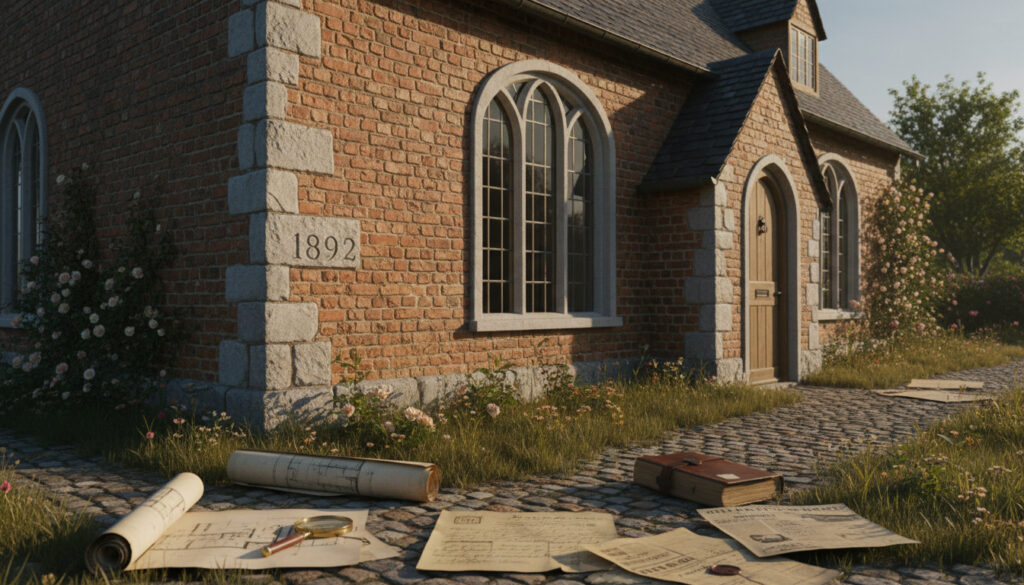
How Old Is My House – 4 Ways to Find Exact Year Built
Determining the exact construction date of a residence serves as a critical step for insurance underwriting, renovation planning, and historical preservation. Whether you are preparing to sell, seeking permits for structural modifications, or tracing architectural lineage, establishing the precise year built requires navigating multiple verification channels with varying degrees of reliability.
Property records maintained by municipal authorities offer the most definitive documentation, yet physical evidence concealed within attics and wall cavities frequently tells a different story. Discrepancies commonly emerge when unpermitted additions obscure the original structure, or when digital databases conflate major renovation dates with initial groundbreaking.
How Do I Find the Year My House Was Built Using Official Records?
County Assessor Records
Parcel searches using your APN provide authoritative construction dates and tax histories directly from municipal databases.
Property Deeds
Ownership documents filed with county recorder offices track title transfers and occasionally note original build years.
Building Permits
Local inspector archives reveal original construction permits and subsequent remodeling approvals.
In-Person Archives
Grantor-grantee indexes and tract books at county offices contain pre-digital era construction data.
- County assessor databases typically list the original construction year rather than subsequent renovation dates
- Online parcel searches require either your street address or Assessor’s Parcel Number (APN)
- Physical inspection of original materials often reveals construction eras predating digital record-keeping
- Real estate aggregators estimate ages by cross-referencing tax data, which may contain transcription errors
- Unpermitted additions frequently create discrepancies between official records and actual structural ages
- Fire insurance maps provide historical documentation for residential structures built before 1950
| Method | Accuracy | Cost | Time Required | Best Application |
|---|---|---|---|---|
| County Assessor Records | High | Free | 5-30 minutes | Primary verification |
| Property Deeds Search | High | Free-$20 | 1-3 days | Ownership history |
| Building Permits | High | Free | 2-5 days | Renovation timeline |
| Real Estate Portals | Medium | Free | Instant | Initial screening |
| Physical Inspection | Medium-High | Free-$500 | 2-4 hours | Discrepancy detection |
| Professional Appraisal | High | $300-$600 | 1-2 weeks | Valuation purposes |
County assessor records and property tax databases provide the most authoritative year-built data, often accessible via online parcel searches using your Assessor’s Parcel Number (APN). HomeLight research indicates that searching your county website for “parcel search” or “property records” reveals tax assessments, values, and construction dates. When digital records prove unavailable, visiting the assessor’s office in person allows access to grantor-grantee indexes or tract books that trace ownership chains back to groundbreaking.
Property tax deeds and ownership documents from county recorder offices detail build dates, renovations, and title transfers. While many jurisdictions now maintain online databases, construction specialists note that older records often remain accessible only through libraries or historical societies.
Can Online Tools Like Zillow Tell Me How Old My House Is?
Real estate aggregation sites including Zillow, Redfin, and Realtor.com offer immediate age estimates through address-based searches. These platforms cross-reference public data on taxes, permits, and sales history to generate construction timelines, providing useful preliminary data for Liverpool houses for sale or domestic properties.
Algorithmic Estimation Limitations
Digital estimates carry inherent constraints. Zillow’s research division acknowledges that automated valuation models occasionally conflate renovation permits with original construction dates. Listing dates on these platforms often reflect when the property last sold rather than when builders completed initial construction.
Cross-Referencing Protocols
Effective use of online tools requires triangulation. After obtaining an initial estimate from real estate portals, verify the date against county assessor records and physical evidence. Building permits available through local inspector offices indicate both original construction and subsequent remodeling phases.
Always confirm digital estimates against county assessor records. Real estate sites occasionally conflate renovation permits with original construction dates, particularly for properties with extensive remodeling histories.
How to Tell the Age of Your House from Physical Features?
When documentary records prove ambiguous or inaccessible, physical evidence within the structure itself provides chronological indicators. Building inspectors recommend examining concealed areas where original materials remain undisturbed by cosmetic updates.
Mechanical Systems and Materials
Electrical and plumbing components offer precise dating mechanisms. Knob-and-tube wiring and galvanized steel pipes typically indicate construction prior to 1950, while copper wiring and PVC plumbing became standard during the post-war residential boom. Subfloor materials provide additional context: rough-cut planks suggest nineteenth-century origins, whereas plywood or OSB indicates modern construction.
Knob-and-tube wiring and galvanized steel pipes typically indicate construction before 1950. Copper wiring and PVC plumbing became standard in residential construction during the post-war housing boom.
Hidden Architectural Evidence
Attics and basements frequently preserve original construction materials. Inspect insulation layers for old newspapers, examine structural beams for handwritten dates, and compare window styles across different elevations. Architectural historians recommend matching features such as roof pitch, window proportions, and floor plans to specific eras ranging from Victorian Gothic to mid-century modern.
Inspection experts emphasize that properties constructed before modern safety standards may contain lead-based paint or asbestos insulation. Professional verification remains essential before disturbing original materials during renovation work.
Component Dating Techniques
Individual fixtures often bear manufacturing stamps. Toilet tank lids, furnace inspection tags, tempered glass windows, and water heaters frequently display production dates that narrow construction windows to specific months or years. Even nail types and flooring transitions reveal chronological boundaries between building eras.
Color-coded historical fire insurance maps, available through library archives or online repositories, document building materials and structural footprints for homes constructed between the 1860s and 1950s.
How Old Is My House? Regional Guides (UK, US, etc.)
Property documentation systems vary significantly across national boundaries, requiring location-specific research strategies.
United Kingdom Records
The UK Land Registry provides title registers containing build and renovation dates for a £3 fee via gov.uk address searches. British property researchers note that visual clues such as erected dates carved into stone lintels or evidence of prior institutional use (chapels converted to residences, former public houses) assist in dating structures when formal records prove incomplete.
Australia and Canada Systems
Australian state land titles offices and Canadian provincial land registries maintain parcel search systems analogous to US county assessor databases. Local council websites in Australia and municipal offices in Canada provide access to building permits and deeds. Physical inspection methods apply universally, though specific terminology for property records varies by jurisdiction.
How Have House Age Verification Methods Evolved?
- Pre-Digital Era (Before 1980): Verification relied entirely on physical inspection of structural materials, oral histories from long-term residents, and manual searches of paper deed books at county courthouses.
- Fire Insurance Mapping (1860s-1950s): Sanborn and similar companies produced color-coded maps documenting building materials, heights, and footprints, creating the first standardized structural databases.
- County Digitization (1990s-2000s): Municipal assessor offices transitioned parcel records from index cards and paper ledgers to searchable online databases, enabling instant construction date lookups.
- Aggregator Algorithms (2000s-Present): Real estate portals developed automated systems pulling tax assessor data, permit records, and sales histories into centralized age estimates.
- Modern Professional Standards: Contemporary appraisal practices now account for age differentials as narrow as two to fifteen years when calculating property valuations.
How Reliable Are Different Methods for Determining House Age?
Understanding the certainty spectrum prevents costly assumptions during property transactions or renovations.
| Established Information | Uncertain or Variable Data |
|---|---|
| County assessor parcel records with APN | Real estate website algorithmic estimates |
| Original building permits on file | Dates derived solely from architectural style |
| Physical materials (knob-and-tube wiring, cast iron pipes) | Unpermitted renovation timelines |
| Fire insurance map documentation | Neighbor recollections and oral histories |
| Manufacturing stamps on original fixtures | Listing dates on sales portals |
Appraisal professionals caution that discrepancies commonly arise when unpermitted additions obscure original construction dates. Official records frequently lag behind major renovations, while digital platforms sometimes overestimate property age following cosmetic updates.
Why Does Knowing Your House Age Matter?
Construction dates influence insurance premiums, with carriers often charging higher rates for older electrical systems or offering discounts for historic preservation efforts. When considering Carlisle houses for sale, age verification affects mortgage approval timelines and inspection requirements.
Renovation planning requires accurate dating to avoid disturbing hazardous materials. Properties built before 1978 likely contain lead-based paint, while pre-1980 insulation may harbor asbestos. Valuation assessments also depend on precise age calculations; appraisers adjust valuations based on age differentials as small as two years when selecting comparable properties.
Historical significance drives preservation tax incentives in many jurisdictions, but these require documentary proof of construction dates and original architectural features. Understanding your home’s true age ensures compliance with local historic district regulations and safety codes.
What Do Property Experts Recommend for Age Verification?
County assessor records and property tax databases provide the most authoritative year-built data, often via online parcel searches using your assessor’s parcel number.
— HomeLight Property Research
Inspect hidden areas for original materials dating construction eras. Attics and basements often preserve newspapers used as insulation, handwritten dates on beams, and original pipe materials.
— Pellak Construction
Appraisers adjust for age differences in valuations, particularly when comparing properties with 2-15 year age differentials.
— Sacramento Appraisal Blog
What Is the Most Reliable Method to Determine My House Age?
The most reliable approach combines county assessor record verification with physical inspection of original structural materials. Start with online parcel searches using your APN, then examine attic beams, basement pipes, and electrical panels for corroborating evidence. When records conflict with physical clues—common in properties with unpermitted additions—consult a licensed building inspector to reconcile discrepancies before finalizing renovation plans or purchase offers.
How do I get a copy of my property deed?
Contact your county recorder or clerk’s office. Most jurisdictions offer online databases where you can search by address or APN, though older records may require an in-person visit to access physical archives.
Is there a completely free way to find my home’s construction date?
Yes. County assessor websites typically provide construction years at no cost via parcel searches. Physical inspection of attic beams, basement pipes, and electrical systems also requires no fees.
What if my house has been remodeled?
Remodels often create discrepancies. Check building permits for renovation dates, inspect hidden areas for original materials, and look for architectural inconsistencies between additions and the main structure.
How accurate are Zillow’s house age estimates?
Medium accuracy. These estimates rely on public tax data that may confuse renovation permits with original construction. Always verify against county records.
Do I need a professional inspector?
Recommended when purchasing or renovating older homes. Inspectors identify hazardous materials like lead or asbestos and verify that physical systems match recorded construction dates.
Can I determine age without my address?
Difficult but possible. Fire insurance maps, neighborhood architectural surveys, and physical inspection of distinctive style features can narrow construction eras even without immediate address access.
More related posts
 Tameka Empson Movies and TV Shows: Full Career Guide
 Ross County F.C. Guide: Location, Ownership, Manager & History
 Part Time Jobs Milton Keynes: 5,702+ Listings for All Schedules
 Galaxy A71 To Buy – Affordable Practical Option
 Kendamil First Infant Milk – Where to Buy and Parent Reviews
 Frank Lampard: Wife, Kids, IQ, Family & Career Facts
 now tv contact number
 Early Stage Leukemia Rash Pictures – Signs on Legs in Toddlers