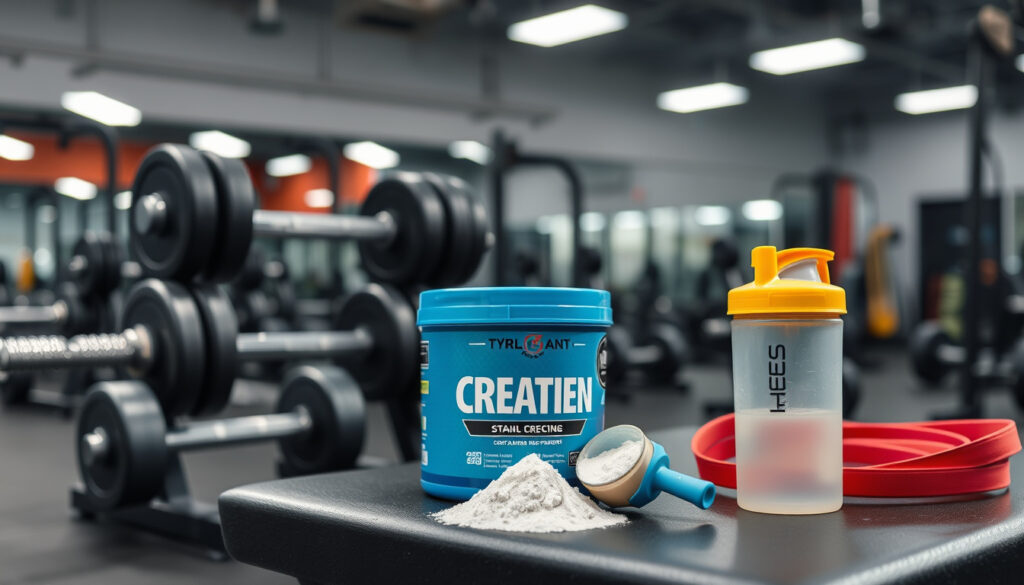
What Is Creatine Good For? Benefits, Risks & Uses
Creatine monohydrate is one of the most rigorously studied supplements on the market, yet myths about its safety and effects still circulate widely. The scientific consensus is clear: for healthy adults engaging in resistance training, creatine delivers measurable muscle strength and performance gains with a safety record spanning 25 years of clinical research.
Muscle strength gains: Greater with resistance training (Mayo Clinic) · Energy source: Supplies ATP to muscles (Cleveland Clinic) · Performance boost: Enhances power bursts (Harvard Health) · Brain health potential: Promotes cognitive function (Cleveland Clinic) · Daily use safety: Generally safe for healthy adults (Mayo Clinic)
Quick snapshot
- Creatine is safe for healthy adults at 3–5g daily (Mayo Clinic)
- 685 clinical trials with 12,839 participants found no increased side effects vs placebo (Texas A&M)
- Weight gain from creatine is primarily lean body mass, not fat (Mayo Clinic)
- Whether creatine causes hair loss — limited evidence, no causation established (Healthline)
- How CKD patients respond to supplementation — caution advised (Mayo Clinic)
- Whether non-exercisers see meaningful benefits beyond basic safety (Mayo Clinic Store)
- ISSN 2017 position stand affirmed safety for all ages (Journal of the International Society of Sports Nutrition)
- FDA granted GRAS status late 2020 (PMC/NIH)
- 685-trial meta-analysis published February 2025 (Texas A&M)
- First-month results typically include increased strength and temporary water weight gain (Mayo Clinic Store)
- Long-term use requires no cycling — consistent dosing maintains saturation (PMC/NIH)
- Consult a provider if kidney disease or medication use is a factor (Mayo Clinic Store)
The table below summarizes the essential specifications and research backing for creatine monohydrate supplementation.
| Fact | Details |
|---|---|
| What it is | Natural compound in muscle cells |
| Primary use | Energy production (ATP) |
| Common form | Creatine monohydrate |
| Daily dose | 3–5 grams maintenance |
| Research backing | 685 trials, 12,839 participants |
| Safety track record | Oral use safe up to 5 years at recommended doses |
What is the benefit of taking creatine?
Creatine works by donating phosphate groups to adenosine diphosphate (ADP) in muscle cells, rapidly regenerating adenosine triphosphate (ATP) — the immediate energy currency your muscles burn during high-intensity effort. This mechanism makes it particularly effective for activities requiring short bursts of power or repeated explosive movements.
Muscle strength and size
The most well-documented benefit of creatine supplementation is increased muscle strength and size when combined with resistance training. A comprehensive analysis found that creatine supplementation leads to greater gains in muscle strength compared to training alone, according to Mayo Clinic guidance. This effect is attributed to improved training capacity, enhanced muscle protein synthesis, and increased water content within muscle cells.
Weight gain associated with creatine is generally in the form of lean body mass, not adipose tissue, according to Mayo Clinic. The initial increase on the scale often reflects water retention in muscle cells rather than fat accumulation — a distinction that matters for anyone tracking body composition.
Athletic performance
Creatine benefits athletes needing short bursts of speed or increased muscle strength, like sprinters and weight lifters, according to Mayo Clinic. Research from Harvard Health indicates creatine contributes to rapid energy production for power or speed bursts, making it particularly valuable for resistance training, sprinting, and high-intensity interval training.
Beyond initial strength gains, creatine enhances post-exercise recovery, injury prevention, and rehabilitation according to PMC research. Athletes experience less muscle damage and faster return to training readiness — a meaningful edge for competitive performers.
Brain health
Emerging evidence suggests creatine may support cognitive function and brain health. Cleveland Clinic notes that creatine may benefit neurodegenerative diseases like Parkinson’s, Huntington’s, and muscular dystrophy. Research from the GSSI Sports Science Exchange shows creatine improves cognition, communication, and self-care in open-label studies, though these findings remain preliminary and require further validation.
The brain also relies heavily on ATP for function, and preliminary studies indicate creatine supplementation may support mental performance during sleep deprivation or cognitively demanding tasks. However, most research remains focused on athletic applications rather than cognitive endpoints.
Mayo Clinic and Harvard Health converge on the same conclusion: creatine’s primary value lies in amplifying the benefits of resistance training. For athletes and gym-goers, the performance payoff is well-established — but creatine is not a shortcut that replaces consistent work in the weight room.
What are the downsides of creatine?
Despite its strong safety profile, creatine does produce some well-documented effects that some users consider downsides — though the scientific evidence often contradicts popular concerns.
Common side effects
Common mild side effects of creatine include bloating, gastrointestinal discomfort, and rare muscle cramping according to Mayo Clinic. However, a comprehensive review of 685 clinical trials with 12,839 participants found that creatine supplementation does not increase side effect rates compared to placebo, according to Texas A&M research. In fact, anecdotal side effects like bloating or cramping are not supported by data — creatine may actually prevent cramping by aiding fluid retention.
Water retention
Creatine causes weight gain generally as lean body mass according to Mayo Clinic. Temporary water retention and mild weight gain are possible, particularly in the initial loading phase when users consume higher doses. This effect is cellular rather than systemic — the water resides inside muscle cells, contributing to a fuller, more hydrated appearance.
Kidney concerns
The most persistent myth about creatine involves kidney function. Research from PMC confirms no kidney damage in healthy individuals from recommended doses. Mayo Clinic notes that oral creatine is likely safe for up to five years at recommended doses in healthy individuals without preexisting kidney conditions.
However, individuals with existing kidney disease should consult a healthcare provider before using creatine supplementation, according to Mayo Clinic Store guidance. Those on medications affecting kidney function should also seek professional advice before beginning supplementation.
No kidney damage in healthy individuals from recommended doses — but that qualifier matters. Anyone with preexisting kidney issues or on relevant medications should discuss creatine with their doctor first. The safety data simply does not extend to compromised renal function.
Is creatine ok to take every day?
Creatine is generally safe for most healthy individuals when taken as directed, with numerous studies supporting short-term and long-term use according to Mayo Clinic. The question of daily use is less about safety — which is well-established — and more about maintaining muscle saturation levels.
Dosage guidelines
Safe at 0.3 to 0.8 g/kg/day for up to 5 years across ages according to PMC research. Most protocols recommend 3–5 grams daily as a maintenance dose after an optional loading phase of 20g per day for 5–7 days. Average creatine dose in studies was 0.166 g/kg/day (about 12.5 g/day) for 64.7 days, with studies lasting up to 14 years according to Journal of the International Society of Sports Nutrition analysis.
Creatine monohydrate is Generally Recognized as Safe (GRAS) by the FDA according to the 2025 JISSN meta-analysis. The supplement is approved for sale in the US, Canada, Europe, Australia, Japan, Republic of Korea, and China.
Long-term use
No adverse events reported in clinical trials up to 14 years across infants to older adults according to JISSN research. After 25 years of research, no adverse effects from recommended doses in healthy adults according to GSSI analysis.
There is no need for cycling on and off creatine — consistent daily dosing maintains stable muscle saturation. ISSN 2017 position stands affirm that creatine is safe and effective for all ages when used as directed.
Creatine’s 25-year safety record in clinical settings means daily supplementation at maintenance doses carries minimal risk for healthy adults. The supplement builds up in muscle tissue over time — skipping days simply causes saturation to decline, not a dangerous buildup.
Does creatine cause hair loss?
The claim that creatine causes hair loss circulates widely in fitness communities, but the evidence remains limited and largely anecdotal.
Evidence review
Limited evidence, mostly anecdotal according to Healthline analysis. No strong causal link to hair loss has been established in controlled studies. The concern stems largely from creatine’s theoretical effect on dihydrotestosterone (DHT), a hormone linked to male pattern baldness, but existing research does not demonstrate a meaningful connection.
The mechanism sometimes cited involves creatine potentially elevating testosterone conversion to DHT, but studies have not consistently shown this effect reaching clinically significant levels. Most individuals using creatine will not experience hair loss attributable to the supplement.
Affected populations
Men with a family history of male pattern baldness may be more sensitive to factors that affect hair follicle miniaturization, but creatine’s role in this process remains unproven. If hair loss is a significant concern, consulting a dermatologist before beginning supplementation provides the most personalized assessment.
The hair loss concern captures attention more than the well-established safety data — despite having far less evidence behind it. Fitness social media amplifies anxieties about marginal risks while underplaying the robust data showing creatine’s safety profile.
What happens after 1 month of creatine?
Users typically notice several changes within the first month of consistent creatine supplementation — some welcome, others simply noticeable.
Expected changes
After 25 years of research, no adverse effects from recommended doses in healthy adults, and increased strength and muscle mass are commonly reported after one month of consistent use combined with resistance training according to Mayo Clinic Store guidance. Initial water weight gain typically occurs during the first week as muscle cells reach saturation.
Muscle and performance
The most noticeable difference is often in training capacity — users report being able to complete more repetitions or lift heavier loads before fatigue. Creatine benefits athletes needing short bursts of speed or increased muscle strength, like sprinters and weight lifters according to Mayo Clinic. Performance enhancement becomes more apparent after the loading phase completes and muscle saturation stabilizes.
Water weight gain of 1–3 pounds is typical during the first week, with this effect leveling off as the body adjusts. This is not fat gain but rather intracellular water retention that contributes to the fuller muscle appearance many users report.
Upsides
- Greater gains in muscle strength and size with resistance training (Mayo Clinic)
- Safe for healthy adults at 3–5g daily (Mayo Clinic)
- 685 trials show no increased side effects vs placebo (Texas A&M)
- Supports post-exercise recovery and injury prevention (PMC)
- May benefit brain health and cognitive function (Cleveland Clinic)
- Reduces muscle cramping by 60% in haemodialysis patients (PMC)
Downsides
- Weight gain from water retention, especially during loading phase
- Potential gastrointestinal discomfort in some users
- Hair loss concern lacks strong scientific support but persists
- Not recommended without provider consultation for kidney disease patients
- No proven benefits for non-exercising individuals beyond general safety
- Muscle saturation drops if doses are missed consistently
“There’s absolutely no data supporting any negative side effect anecdotally reported about creatine on the internet and in the media.”
— Richard Kreider, Researcher at Texas A&M (Texas A&M Stories)
“Results demonstrate that Cr supplementation does not increase the prevalence or frequency of side effects when compared to participants ingesting PLA. Therefore, claims that Cr supplementation increases the risk of side effects are unfounded.”
— Kreider et al., Authors (Journal of the International Society of Sports Nutrition)
The evidence is remarkably consistent across institutions: creatine monohydrate is safe, well-tolerated, and effective for its primary intended use — enhancing high-intensity exercise performance. What remains less clear is whether every person who takes it actually needs it. For competitive athletes and serious lifters, the performance return justifies the investment. For sedentary individuals or those with specific health concerns, the calculus shifts considerably.
Related reading: Where Are Your Kidneys Located? · Female Upper Inner Thigh Pain
my.clevelandclinic.org, youtube.com, gssiweb.org, orthoinfo.aaos.org, health.harvard.edu
Creatine enhances muscle strength and performance for athletes, but as its benefits and safety analysis reveals, potential side effects demand careful daily dosing from trusted sources.
Frequently asked questions
Should people with CKD take creatine?
Individuals with chronic kidney disease (CKD) should consult their healthcare provider before using creatine. While healthy kidney function shows no adverse effects from recommended doses, the safety data does not extend to those with preexisting renal compromise. Creatine is metabolized by the kidneys, and anyone with impaired function should receive professional guidance.
Why do doctors say no to creatine?
Most physicians do not blanket-oppose creatine use for healthy individuals. Concerns typically arise only when patients have kidney disease, liver conditions, or are taking medications that interact with kidney function. The medical community’s caution generally reflects the need for individual assessment rather than opposition to the supplement itself.
Can I take creatine if I don’t workout?
Creatine is primarily effective for enhancing exercise performance. For non-exercisers, any benefits beyond general safety are unclear and likely minimal. Without resistance training or high-intensity activity, creatine’s mechanism — regenerating ATP for explosive muscle contractions — simply has fewer practical applications.
Is creatine a steroid?
No. Creatine is not an anabolic steroid. It is a naturally occurring compound found in muscle cells and certain foods. Unlike anabolic steroids, which are synthetic variations of testosterone, creatine works through cellular energy metabolism rather than hormonal pathways. It is legal, widely available, and classified as GRAS by the FDA.
When to take creatine?
Timing is less critical than consistency. Daily intake at roughly the same time each day maintains stable muscle saturation. Some users prefer taking creatine post-workout with protein and carbohydrates, theorizing that insulin spikes aid absorption, but research does not strongly support dramatic timing benefits.
What does creatine do for women?
Women experience similar performance benefits from creatine as men when engaging in resistance training or high-intensity exercise. Some research suggests women may require slightly lower doses relative to body weight, but the fundamental mechanism and safety profile remain consistent. Creatine is safe for healthy women at the same recommended adult doses.
What is creatine monohydrate?
Creatine monohydrate is the most studied and widely used form of creatine supplement. It consists of creatine bonded to a single water molecule, creating a stable, well-absorbed compound. Creatine monohydrate is GRAS-listed by the FDA and is approved for sale in the US, Canada, Europe, Australia, Japan, Republic of Korea, and China. It represents the baseline form against which all other creatine variants are measured for efficacy and safety.
More related posts
 Love Saves the Day 2025 Lineup, Tickets & Festival Info
 A Thousand Blows Cast: Characters, True Story & Season 2 News
 Sabrina the Teenage Witch – Cast, Reboots, Where to Watch
 What Century Are We In Now? 21st Century (2001-2100)
 DVLA Swansea Contact Number – Official Phone Details
 Indiana Jones and the Temple of Doom: Cast, Controversy & Ranking
 Blossom Word Game Today: Hints and Scoring Tips
 20 Stone in KG – Exact Conversion Tables and Guide