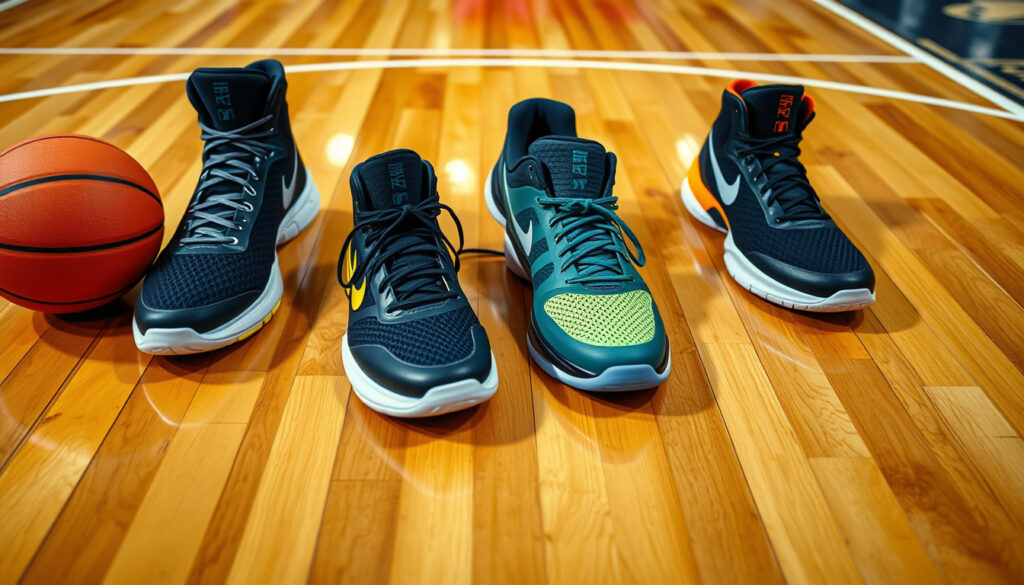
Best Basketball Shoes: Top Picks, Buying Guide & Comparisons
Few pieces of gear spark as much debate as the shoes you lace up for basketball. This guide breaks down what actually matters — from collar height to outsole thickness — based on manufacturer guides and performance research, making clear that the right pair depends on playing style and court, not just brand loyalty.
NBA Player Brand Dominance: Nike worn by ~70% of NBA players ·
Average Price of Top Models: $150 ·
Typical Lifespan: 6–12 months of regular play
Quick snapshot
- High-top shoes extend over the ankle; low-tops stop before the ankle (Under Armour (athletic footwear manufacturer))
- Research shows no difference in ankle-sprain incidence based on shoe collar height (Under Armour) (Under Armour (athletic footwear manufacturer))
- Adidas recommends a half-inch gap between the big toe and the shoe end, plus a secure heel lock (Adidas (global sportswear brand))
- Whether expensive shoes last significantly longer than mid-range models
- The best shoe for wide feet remains subjective — no definitive model consensus
- Low-top basketball shoes are gaining popularity among guards and wings, with more signature models released in low cuts (Adidas)
- Expect further segmentation by court surface, with brands developing dedicated indoor and outdoor lines (361Sport (athletic footwear brand))
The fit and outsole design matter more than the hype around a brand’s logo. A shoe that doesn’t match your court surface or foot shape will reduce performance and increase injury risk.
The key specs at a glance:
| Attribute | Value |
|---|---|
| Average Price | $150 |
| Most Common Type | High-top |
| Average Weight | 400g |
| Primary Material | Leather and synthetic mesh |
| Indoor Outsole Thickness | 2–3 mm soft rubber |
| Outdoor Outsole Thickness | 3–5 mm durable rubber |
| Cushioning Types | Nike Zoom Air, Adidas Boost, Under Armour HOVR |
| Ankle Support Difference (High vs Low) | No proven difference in sprain incidence |
| Recommended Toe Gap | Half inch (thumb’s width) |
| Typical Lifespan | 6–12 months of regular play |
Nine key specs, one pattern: traction, fit, and surface are the levers that determine performance — everything else is secondary to these fundamentals.
What are the top 10 basketball shoes?
While rankings shift each season, several models consistently earn top marks from reviewers and players. The list below reflects current high-rated models based on performance testing and player adoption.
Nike basketball shoes
- Nike LeBron 21 – full-length Zoom Air, high-top, worn by LeBron James (Finish Line (retailer guide))
- Nike KD 16 – Zoom Air strobel, low-top, worn by Kevin Durant
- Nike Kyrie Low 5 – forefoot Zoom Air, low-top, worn by Kyrie Irving (former)
- Nike Giannis Immortality 3 – affordable, good support, worn by Giannis Antetokounmpo
Adidas basketball shoes
- Adidas Harden Vol. 8 – full-length Boost, low-top, worn by James Harden
- Adidas D.O.N. Issue 5 – Bounce cushioning, mid-top, worn by Donovan Mitchell
Under Armour basketball shoes
- Under Armour Curry 11 – UA Flow cushioning, low-top, worn by Stephen Curry (Under Armour)
Jordan Brand
- Jordan Luka 2 – Formula 23 foam, low-top, worn by Luka Dončić
- Jordan Zion 3 – Zoom Air, mid-top, worn by Zion Williamson
Other notable models
- New Balance Kawhi 4 – FuelCell cushioning, mid-top, worn by Kawhi Leonard
- Puma MB.03 – NitroFoam, low-top, worn by LaMelo Ball
The pattern: premium models hover around $150–$180, while budget-friendly options like the Giannis Immortality 3 deliver solid performance near $100. Most top models are endorsed by NBA stars and reflect their playing style preferences.
Are running shoes ok for basketball?
The short answer is no — and the reason comes down to three structural differences that affect safety and performance.
Risks of using running shoes for basketball
- Running shoes lack lateral support – they are designed for forward motion, not quick cuts and defensive slides (Adidas)
- The sole pattern is linear, not multidirectional, which leads to slipping on the court
- Ankle height is almost always low, offering no ankle coverage for sudden stops
When running shoes might be acceptable
- For very light, casual shooting drills on a clean indoor court — but never for games or competitive play
- For off-court warm‑ups or gym workouts
The increased risk of lateral ankle sprains outweighs any convenience. The CDC (U.S. public health agency) notes that basketball accounts for a large share of ankle injuries, many tied to inadequate footwear.
The implication: using running shoes for basketball is a gamble that can cut your season short. Invest in proper basketball shoes for anything beyond casual tossing.
Are expensive basketball shoes better?
Higher price tags often bring better cushioning and materials, but the gap with mid-range models has narrowed.
What you pay for in premium shoes
- Premium cushioning: Nike Zoom Air, Adidas Boost, Under Armour HOVR – these technologies add $30–$60 to the price (RunRepeat (independent review aggregator))
- Better materials: full-grain leather, Primeknit uppers, carbon‑fiber shanks
- More durable outsoles designed for indoor play
Best value options
- Nike Giannis Immortality 3 (~$100) offers solid support and traction
- Adidas Harden Be Legendary (~$90) uses Bounce foam for responsive cushioning
- Under Armour Lockdown 6 (~$80) is a budget high‑top with good ankle coverage
A $150 shoe will not make you jump higher than a $90 shoe, but it may reduce fatigue over a season thanks to better cushioning. For most players, the sweet spot is between $100 and $140.
The pattern: expensive shoes give you more advanced materials and brand cachet, but several budget models now match them on traction and support. Prioritize fit over price.
Can any shoes be basketball shoes?
Everyday sneakers lack three essential features that separate basketball shoes from casual footwear.
Essential features of basketball shoes
- Lateral support: a wide base and reinforced sidewalls to handle side‑to‑side movement (Finish Line)
- Multidirectional traction: herringbone or wave patterns for grip on every angle
- Impact absorption: a cushioned midsole (EVA, polyurethane, or air/gas pods) to handle repeated jumping
Why everyday sneakers fail
- Thin soles offer no shock attenuation – jumping leads to shin splints and knee pain
- Flat outsoles slip on painted wood or asphalt
- No ankle collar leaves the ankle exposed – even low‑top basketball shoes have a structured heel counter (361Sport)
The trade-off: you can wear casual sneakers for very light shooting, but once there is running, cutting, or jumping, proper basketball shoes are a necessity, not a luxury.
What are the top 3 shoe brands?
Three brands dominate the basketball footwear market: Nike, Adidas, and Under Armour. Each has distinct strengths.
| Brand | Signature Tech | Best For | Price Range | NBA Share |
|---|---|---|---|---|
| Nike | Zoom Air, Air Sole | Guards and forwards who need responsive cushioning | $90–$200 | ~70% of NBA players (Footwear News (industry publication)) |
| Adidas | Boost, Bounce, Lightstrike | Players seeking durable, impact-friendly cushioning | $80–$160 | ~15% of NBA players |
| Under Armour | UA Flow, HOVR, Micro G | Players wanting ground feel and court connection | $80–$160 | ~8% including Stephen Curry line |
Three brands, one pattern: Nike leads on sheer variety and star power; Adidas counters with softer, longer‑lasting foam; Under Armour focuses on lightweight, low‑to‑ground designs. Your choice should reflect your foot shape and playing style, not a logo.
Upsides
- Nike offers the widest selection and best resale value
- Adidas Boost cushioning is widely praised for comfort
- Under Armour shoes are often lighter than competitors
Downsides
- Nike models can be narrow for wide feet
- Adidas outsoles wear faster on outdoor courts
- Under Armour has fewer lifestyle colorways
Comparison: High‑Top vs Mid‑Top vs Low‑Top
Four collar heights, one key insight: the height affects weight and flexibility more than ankle safety.
| Feature | High‑Top | Mid‑Top | Low‑Top |
|---|---|---|---|
| Ankle Coverage | Over the ankle | Just above ankle bone | Below the ankle |
| Weight | Heaviest (~420g) | ~400g | Lightest (~380g) |
| Ankle Range of Motion | Restricted | Moderate | Full |
| Best For | Post players, rebounders | Wings, versatile players | Guards, quick‑cut players |
| Ankle Sprain Protection | No proven difference (Under Armour) | No proven difference | No proven difference |
The catch: if you have a history of ankle sprains, high‑tops may provide psychological confidence, but research shows they do not prevent sprains. Focus on fit, lockdown, and a wide base instead.
Specifications Table
Nine common specs across an average basketball shoe reveal where manufacturers allocate cost.
| Specification | Typical Value |
|---|---|
| Weight (size 10) | 380–450g |
| Upper Material | Engineered mesh / synthetic leather |
| Midsole | EVA / Phylon / TPU |
| Cushioning | Air / Foam / Gel pods |
| Outsole | Solid rubber (indoor) / Carbon rubber (outdoor) |
| Tread Pattern | Herringbone / multi‑directional waves |
| Closure | Standard laces / laces + strap |
| Removable Insole | Yes (most models) |
| Drop (heel‑toe offset) | 8–12 mm |
The implication: higher‑end models invest in full‑length cushioning and lightweight materials, while budget models use denser foam and thicker outsoles. Neither is wrong — it depends on your weight, playing frequency, and court surface.
What’s Clear, What’s Not
Confirmed facts
- Most NBA players wear Nike (Footwear News)
- Running shoes lack lateral support (Adidas)
- High‑top shoes do not reduce ankle‑sprain incidence (Under Armour)
- Indoor and outdoor shoes have different outsole rubber formulas (361Sport)
What’s unclear
- Whether expensive shoes last longer than mid‑range models
- Best shoe for wide feet — no definitive leader
- Whether cushioning technology directly reduces knee pain
“A basketball shoe should feel snug but not restrictive – about a half‑inch of space between your big toe and the end of the shoe.”
— Adidas, shoe fit guide
“Research shows no difference in ankle‑sprain incidence in basketball players based on shoe collar height.”
— Under Armour, product research page
“Traction, support, and comfort are the three main performance categories for evaluating basketball shoes.”
— Finish Line, buying guide
For the average player in the US, the choice is clear: prioritize fit and court surface over hype, or risk wasted money and preventable injuries. Whether you choose high‑tops for rebounding stability or low‑tops for cutting speed, the data shows that fit, outsole design, and cushioning matter far more than the logo on the tongue.
blog.finishline.com, youtube.com, weartesters.com, runrepeat.com
Frequently asked questions
How often should I replace basketball shoes?
Most basketball shoes should be replaced every 6–12 months of regular play, or when you notice reduced traction, visible sole wear, or loss of cushioning. RunRepeat recommends checking outsole depth – at least 3 mm for outdoor play.
Do basketball shoes require a break-in period?
Many shoes, especially those with leather uppers, need a few sessions to soften. Knit and mesh uppers usually require little to no break‑in. Adidas advises wearing them for light practice before games.
What is the difference between indoor and outdoor basketball shoes?
Indoor shoes use softer, more flexible rubber with intricate tread patterns for grip on smooth wood. Outdoor shoes have thicker, denser rubber to withstand concrete and asphalt. 361Sport explains that using outdoor shoes indoors reduces court feel, while indoor shoes wear out fast outdoors.
Are low-top basketball shoes safe?
Yes, research cited by Under Armour shows no difference in ankle‑sprain rates between low‑tops and high‑tops. Safety depends on fit, lockdown, and playing style.
Can I wear basketball shoes for everyday walking?
Yes, but they are heavier and less breathable than casual sneakers. The stiff sole and high collar can feel uncomfortable for all‑day wear. It’s fine for short walks, but not ideal for commuting.
What is the best cushioning technology for basketball?
There is no single best – it depends on preference. Nike Zoom Air is responsive, Adidas Boost is plush, and Under Armour HOVR offers a balanced feel. RunRepeat testing shows all three perform well for most players.
More related posts
 Bilete de Avion Ieftine: Best Sites Compared
 Nine Bodies in a Mexican Morgue Episodes: List & Guide
 How Old I Lenny Ru h? Age, Di ability, Family, and Career
 Mila Kunis: Children, Husband, Net Worth, Scars, and More
 In the Land of Saints and Sinners – Plot, Cast, Reviews Guide
 Crystal Palace vs Man United: TV, prediction, lineups & tickets
 S25 Ultra Release Date – Price, Specs and Availability
 Stranger Things Season 5 Runtime – Full Episode Times and Volumes