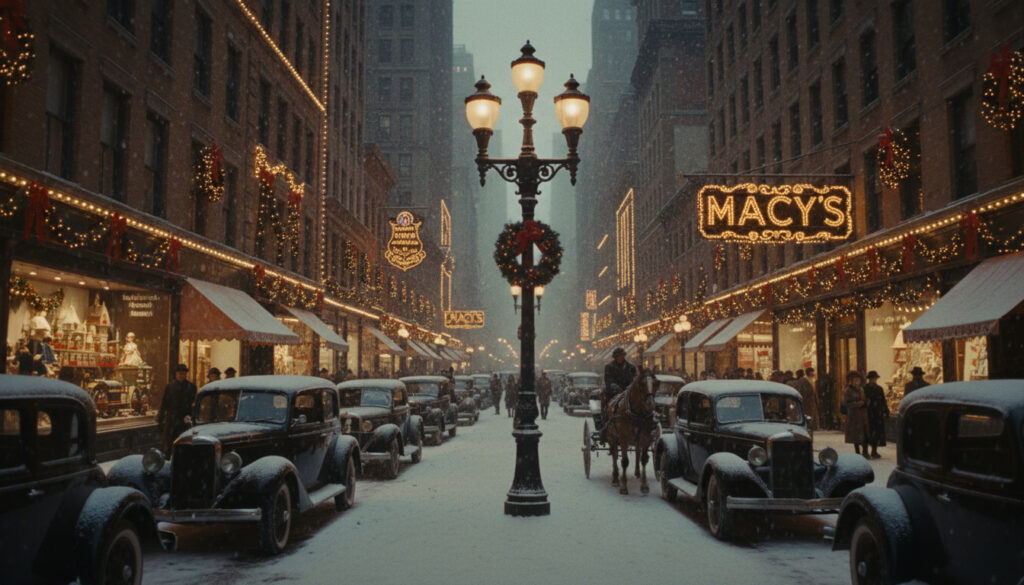
Miracle on 34th Street – Timeless Film of Holiday Magic
A perennial fixture of the holiday season, “Miracle on 34th Street” (1947) weaves a narrative of belief and skepticism anchored in the heart of post-war New York. The film centers on a Macy’s department store Santa who claims to be the real Kris Kringle, igniting a legal and moral debate about the spirit of Christmas and the boundaries of cynicism and faith.
Directed by George Seaton and based on a story by Valentine Davies, the film transcended its genre to become an emblem of hope and familial warmth. By blending authentic locations, genuine parade footage, and sharp performances, “Miracle on 34th Street” established a cinematic legacy that has influenced American perceptions of the holidays for generations.
What is the plot of Miracle on 34th Street and why is it a timeless tale?
1947
George Seaton
Multiple Academy Awards and honors
A cornerstone of American holiday cinema
- Introduced a new blend of realism and magic into holiday storytelling
- Highlighted social critique on commercialism versus genuine holiday spirit
- Became a mainstay in American holiday tradition and family rituals
- Inspired remakes and reinterpretations over decades
- Influenced the cultural image of Santa Claus on film
- Anchored by nuanced performances and authentic New York settings
- Continues to spark debate about belief and skepticism
| Attribute | Detail |
|---|---|
| Film Title | Miracle on 34th Street |
| Release Year | 1947 |
| Director | George Seaton |
| Genre | Drama, Family, Fantasy |
| Awards | Multiple Academy Awards |
| Cultural Impact | Redefined the portrayal of Santa Claus and holiday spirit |
The narrative follows Doris Walker, a practical Macy’s executive, who raises her daughter Susan with a cautious, fact-based outlook. When Kris Kringle steps in to replace a drunken Santa during the 1946 Macy’s Thanksgiving Parade, his performance soon leads to a position at Macy’s and challenges the commercial focus of the season. Kringle’s insistence on authenticity—sending children to rival stores for stock shortages—sparks joy in the public and draws ire from competitor Gimbels and internal critics alike.
The heart of the film unfolds in a courtroom, where Fred Gailey, Doris’s neighbor, defends Kringle’s true identity. The trial converts a cynical public, stirring debate about faith, evidence, and what it means to believe. Its blend of humor, skepticism, and sentiment secured “Miracle on 34th Street” as a classic, echoing through holiday film history and beyond.
Who were the key figures behind Miracle on 34th Street?
The Main Cast and Their Roles
Edmund Gwenn took on the iconic role of Kris Kringle, bringing warmth and authenticity to the department store Santa. Maureen O’Hara portrayed Doris Walker, perfectly capturing the tension of a holiday-weary professional and mother. John Payne played Fred Gailey, the earnest lawyer and neighbor who champions Kringle’s case. As Susan Walker, Natalie Wood represented childhood skepticism gradually transformed by wonder and trust. For additional information, see IMDb.
Director, Screenplay, and Source Material
George Seaton not only directed the film but adapted the screenplay from Valentine Davies’s original story. Davies initiated the project after a discussion with Seaton about holiday commercialism—they both sought to explore the enduring question: “What if Santa Claus returned and demanded to be believed?” Their collaboration anchored the film’s tone and message.
Production and Technical Crew
Producer William Perlberg led a creative team that included cinematographer Charles Clarke, art directors Richard Day and Richard Irvine, composer Cyril Mockridge, and editor Robert Simpson. Together, they engineered the seamless combination of live New York spectacle and controlled studio environments.
Edmund Gwenn’s real-life participation as Santa in the 1946 Macy’s parade lent authenticity and helped secure the film’s Academy Award for Best Supporting Actor. (source)
Awards and Honors
“Miracle on 34th Street” earned three Oscars—Best Supporting Actor (Edmund Gwenn), Best Original Story (Valentine Davies), and Best Screenplay (George Seaton)—and received a nomination for Best Picture. The recognition underscored both its creative excellence and lasting cultural resonance (Miracle on 34th Street – Oscars Collection Highlights).
What is the cultural impact of Miracle on 34th Street?
An Enduring Holiday Tradition
The film’s release coincided with post-war optimism and an economic boom. “Miracle on 34th Street” quickly established itself as an annual tradition thanks to its nuanced depiction of family, hope, and generosity. Its frequent television airings and theatrical revivals cemented its iconic status for generations (Miracle on 34th Street (1947)).
The Portrayal of Santa Claus and Challenge to Commercialism
Kris Kringle is presented as the genuine embodiment of the Santa mythos—kind, steadfast, and untouched by commercial greed. The film both critiques the era’s growing consumerism and celebrates authentic giving. These themes have shaped subsequent representations of Santa Claus on screen.
After the film’s release, the volume of “Dear Santa” letters increased by 25%, reflecting renewed public engagement with the holiday’s magic. (source)
Influence on Other Media and Holiday Films
“Miracle on 34th Street” has inspired numerous stage, radio, television, and film adaptations. Its central courtroom drama, blending real-world stakes with fantasy, set a template for future holiday stories.
What are the production details and historical milestones of Miracle on 34th Street?
Release Date and Reception
Unusually, the original film debuted in the U.S. on May 2, 1947, with its New York premiere following in June. The distributor, 20th Century Fox, opted for an early release to benefit from peak summer attendance and quickly recover production costs (source: https://www.boweryboyshistory.com/2014/12/the-real-miracle-on-34th-street-21.html).
Filming Locations and Authenticity
Sequences from the 1946 Macy’s Thanksgiving Day Parade were filmed live in New York City, even as harsh weather froze cameras and crew. Interior scenes inside Macy’s took place at night, well after shoppers had gone. Natalie Wood later remembered these nights as opportunities to explore the store’s toy department undisturbed.
Freezing temperatures during the live parade shoot caused equipment to malfunction, requiring improvisation and help from local residents for the cast and crew to stay warm (source: https://www.tcm.com/articles/359279/miracle-on-34th-street-1947).
Differentiating Original and Remakes
Several remakes and reinterpretations have retold the story in different formats, including stage productions and more modern films. Notably, none have replicated the unique combination of post-war optimism, courtroom drama, and live-parade authenticity that distinguish the 1947 original (source: https://www.oscars.org/collection-highlights/miracle-on-34th-street).
Factual Basis and Narrative Inspiration
The narrative was shaped by frustrations with rampant holiday commercialism, but it is not based on a true story. Instead, it draws heavily on contemporary social trends and the creators’ imaginations, fusing fantasy with genuine locations to create plausibility.
How has Miracle on 34th Street evolved through time?
- : Original release of Miracle on 34th Street (source: https://www.tcm.com/articles/359279/miracle-on-34th-street-1947)
- Shortly after 1947: Critical acclaim and award recognitions (source: https://www.oscars.org/collection-highlights/miracle-on-34th-street)
- Subsequent decades: Influence on holiday films and recurring television broadcasts
- Remakes and adaptations: New interpretations and creative differences appear over time
What is known for certain about Miracle on 34th Street—and what remains debated?
| Established Facts | Lingering Questions |
|---|---|
| Confirmed 1947 release and New York premiere | Whether the story reflects any real-life events or individuals |
| Winner of three Academy Awards, Best Picture nominee | Interpretations of the film’s blend of fantasy and realism |
| Originated from conversations about holiday commercialism | Details about Gimbels’ chairman’s rumored involvement |
| Live parade footage and authentic on-location scenes | Exact accounts of behind-the-scenes improvisations |
| Subsequent remakes, adaptations, and novelizations | Complete motivations for specific creative choices |
How does Miracle on 34th Street fit into cinema and holiday traditions?
Emerging at a time of profound social change, “Miracle on 34th Street” reimagined what a holiday film could achieve. Its frank discussion of skepticism, consumer culture, and belief marked a new direction, contrasting with prior sentimental or purely comedic efforts. The film’s legacy has grown through repeated television showings, ensuring its continued presence in homes and conversations each December.
Critics and historians have frequently cited its technique of embedding fantasy within real events—such as the Macy’s parade—as central to its enduring status and influence over the holiday genre. Its approach inspired a wave of similar films balancing humor, social observation, and optimism.
Which sources and perspectives shape our understanding of Miracle on 34th Street?
“From its legendary parade sequences to Edmund Gwenn’s gentle performance, this film set the standard for what a holiday movie could be—rooted in reality, yet irresistibly magical.”
Turner Classic Movies
“The courtroom drama—where belief and logic are pitted against each other—makes Miracle on 34th Street much more than seasonal cheer; it’s a meditation on faith and post-war society’s tensions.”
Film critics, as reported by TCM
Additional context can be found on Wikipedia.
What remains the lasting message of Miracle on 34th Street?
“Miracle on 34th Street” continues to resonate as a testament to belief, kindness, and the magic found in ordinary life. As a pivotal entry in American film history, its story endures among holiday classics and cultural milestones (Miracle on 34th Street (1947)). For further reviews, visit Rotten Tomatoes.
For more insights and analyses, please refer to IMDb for an overview of the film’s enduring appeal.
Frequently asked questions about Miracle on 34th Street
Is Miracle on 34th Street based on a true story?
Where was Miracle on 34th Street filmed?
What are the differences between the original and its remakes?
Who directed Miracle on 34th Street?
Who played Kris Kringle/Santa Claus?
Why was the film released in summer despite its Christmas theme?
Did the film use real parade footage?
How was the story of Miracle on 34th Street created?
Which awards did the film win?
Where can I learn more about the film’s legacy?
More related posts
 Frozen Jacket Potato in Air Fryer – Crispy and Fluffy Every Time
 How to Screenshot on Chromebook: Easy Keyboard Shortcuts
 Dwp 780 Benefits Extra Payment – Clear Eligibility Guide
 Adam Peaty: Why His Mum Missed His Wedding, Name Change & ADHD
 Take Home Pay Calculator UK – Clear Net Income Guide
 What Does NRS Mean – Law, Bible, Medicine, Gaming Definitions
 Love Saves the Day 2025 Lineup, Tickets & Festival Info
 Elemis Pro Collagen Marine Cream – Reviews Sizes Variants Guide