London Marathon 2025 Route: Map, Course & Start Details
Every spring, roughly 50,000 runners flood the streets of London for one of the world’s most celebrated marathons — a course that winds past the Cutty Sark, over Tower Bridge, and through Canary Wharf before finishing in the shadow of Buckingham Palace. Whether you’re lacing up for the first time or cheering from the pavement, knowing the 26.2-mile line makes the day infinitely more rewarding.
Distance: 26.2 miles · Start Location: Greenwich Park · Finish Location: The Mall · Direction: East to West through London · Key Feature: Iconic landmarks and crowds
Quick snapshot
- Minor 2025 route tweaks pending official confirmation
- Exact wave gate timings released closer to race day
- Potential updates to road closure schedules
- Roads reopen progressively after the final runner crosses
- Official GPX files published closer to race day
- Registered runners receive detailed participant guides
The table below consolidates the key course specifications from official and verified sources.
| Detail | Value |
|---|---|
| Official Distance | 26.2 miles (42.195 km) |
| Start Point | Greenwich Park, southeast London |
| Finish Point | The Mall, Westminster |
| Elevation Gain | 90.48 meters (296.85 feet) |
| Course Certification | World Athletics certified |
| Number of Start Lines | 3 (Red, Green, Blue) |
| Convergence Point | 4.5 km (2.8 miles) in Woolwich |
| Halfway Point | Tower Bridge |
| Final Stretch | 352 meters (385 yards) |
What is the route for the London Marathon 2025?
The 2025 TCS London Marathon follows the same celebrated point-to-point course that has defined the event since its founding in 1981 — starting in southeast London and ending beside Buckingham Palace. The official distance is 42.195 km (26.2 miles), with mile markers positioned at one-mile intervals throughout the course.
Start in Greenwich Park
Runners don’t all start from the same spot. The London Marathon operates three separate start lines: the Red Start on Charlton Way in southern Greenwich Park, the Green Start in St John’s Park, and the Blue Start on Shooter’s Hill Road. Each start point staggers runners through the early kilometres before all three streams converge at Woolwich, roughly 4.5 km (2.8 miles) from the first footfall.
The course begins at approximately 35 metres (115 feet) above sea level in Blackheath, south of the River Thames. RunReady notes that the longest uphill section starts at km 0.67 and spans 0.66 km at an average grade of 0.67%, while the longest downhill drops 1.81 km at an average grade of -2.15% — a terrain profile classified as Easy for a road marathon with a TrailScore of 36.79.
Three separate starts mean three separate walk-up routes to your pen. If you’re assigned the Blue Start, factor in additional travel time from Shooter’s Hill Road to reach your zone.
Mid-route landmarks
Once runners converge in Woolwich, the course heads west through Deptford and Surrey Quays towards Rotherhithe. At the 10 km mark, participants pass the Old Royal Naval College and Cutty Sark in Greenwich — a stretch that draws enormous crowd support. The halfway point is marked by the iconic crossing of Tower Bridge, a moment that consistently produces some of the day’s loudest cheers.
After Tower Bridge, runners follow The Highway through Wapping and Limehouse before entering the Isle of Dogs via Westferry Road. The route then sweeps through Canary Wharf’s towering financial district before turning back toward central London along The Highway. A moderate downhill section around miles 22.96–23.06 can catch tired quads off guard in the final stretch, according to RunReady’s course analysis.
The Docklands section between miles 13 and 20 has fewer spectator crowds than the early Greenwich stretch and the final Westminster approach. Training for sustained focus without the same ambient energy helps runners manage the mental challenge of this quieter corridor.
Finish on The Mall
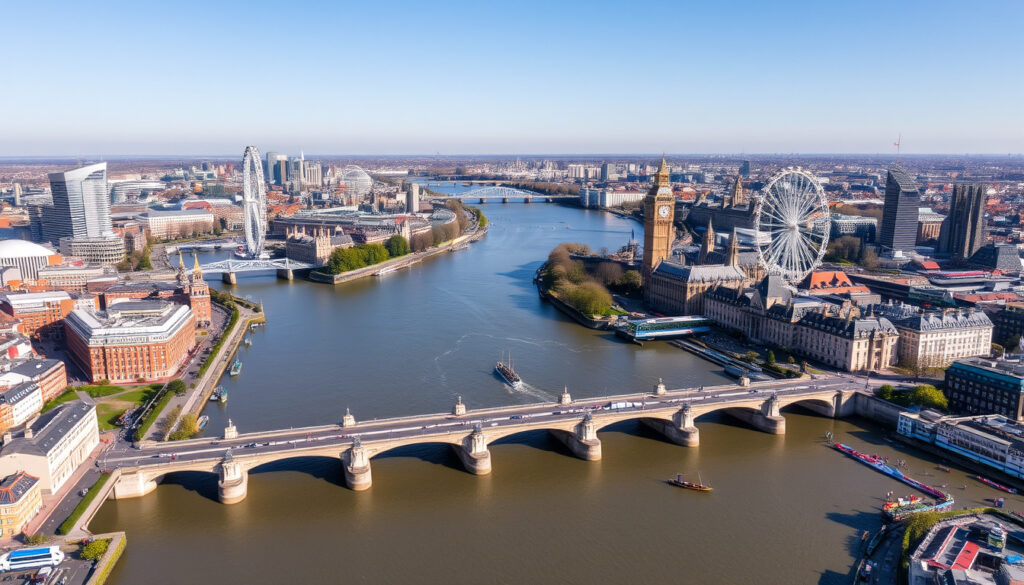
The final mile unfolds along The Embankment, where the London Eye comes into view before runners turn right into Birdcage Walk. The last 352 metres (385 yards) offer views of Big Ben and Buckingham Palace, with the race concluding on The Mall alongside St. James’s Palace. The final section formed part of the 2012 Olympic Marathon course, lending it additional historical resonance.
What time do London Marathon runners start?
The 2025 TCS London Marathon staggers its start times to manage the volume of participants. Elite races and the main waves begin at 8:50 a.m., with the mass participation event starting at 9:35 a.m. The three start lines (Red, Green, Blue) each operate within these broad windows, with runners directed to their assigned pen well before the gun fires.
Elite start times
Wheelchair athletes typically set off first, followed closely by the elite women’s field. These start times are deliberately earlier than the mass event to allow for broadcast coverage and prize ceremony logistics without interference from thousands of slower-paced participants.
Mass participation waves
The mass race’s 9:35 a.m. start sees tens of thousands of runners released in waves from the three start locations. Runners are assigned to a specific pen and start line based on their predicted finish time, which they declare during registration. The staggered wave system prevents overcrowding in the first few kilometres and reduces bottlenecking at water stations.
If you’re spectating, position yourself at Tower Bridge (approximately 21 km into the race) by around 10:30 a.m. to catch the bulk of mass participants crossing at their halfway split.
The implication: arrival time to your spectating spot matters. The mass wave takes roughly 90 minutes to fully clear the start pens and reach the halfway point — plan accordingly if you want to catch specific pace groups.
What roads are closed for the London Marathon?
The London Marathon closures span the full 26.2-mile corridor from Greenwich to Westminster. Roads begin closing from the early morning hours, with full closures along the race route and surrounding support zones. The closures are managed in sections, with roads reopening progressively as the final runner clears each segment and the sweep vehicle passes.
Key closure zones
The primary closure zones cover the three start areas in Greenwich Park, St John’s Park, and Shooter’s Hill Road; the Woolwich convergence stretch; the Tower Bridge and The Highway sections; the Canary Wharf loop; and the final Embankment and Mall approach. Exact closure windows vary by location and are published closer to race day on Transport for London and the London Marathon official channels.
Duration of closures
Most road sections experience closures for 4–6 hours, with the Embankment and Mall remaining closed longest — typically until mid-afternoon as the final ceremonial activities conclude. Local residents receive advance notification and specific access windows for properties within the closure zones.
Impact on traffic
The course cuts across several major transport corridors, including sections of the A2, A200, and the Tower Bridge approach. Transport for London advises drivers to avoid the central and southeast London areas on race morning and to plan additional journey time if travel is unavoidable. The marathon falls on a Sunday, which limits but does not eliminate the commuter impact.
The pattern: the closures follow the course from east to west — Greenwich roads clear first, followed by the Docklands sections, then Tower Bridge and The Highway, with the Embankment and Mall the last to reopen. If you’re driving across the route, work westward from Greenwich in the hours after race start.
London Marathon 2025 route map
The official London Marathon course map is powered by Tata Consultancy Services, which has partnered with the event since 2016. Runners and spectators can access the route through multiple formats, including interactive online maps, downloadable PDF course guides, and certified GPX files for GPS watch uploads.
Official map sources
The primary source for the official course map is the London Marathon website, which publishes the course layout for each year’s event. The 2025 route largely mirrors the established course with any year-specific adjustments noted in the event’s official runner communications. The Tata Consultancy Services partnership ensures that the digital mapping and timing infrastructure meets World Athletics standards.
Interactive Google Maps
Several platforms have overlaid the London Marathon course onto Google Maps, allowing runners to visualise the exact route against street-level geography. These tools prove particularly useful for planning spectator positions or visualising training routes that mirror course segments. The Go&Race platform offers a dedicated 2025 course map view with landmark markers throughout the course.
PDF downloads
Runners registered for the 2025 event receive a downloadable PDF course map as part of their participant materials. The document includes mile marker positions, water station locations, medical aid points, and the official elevation profile. The certified GPX file — measured at 42.12 km by RunReady — can be loaded onto compatible GPS devices for real-time pace tracking against the exact course.
GPS watch accuracy varies through urban canyons like Canary Wharf and along The Highway’s high-sided streets. Expect up to 3–5% distance variance in these sections compared to the official course measurement.
Can you walk the London Marathon in 8 hours?
Walking the London Marathon is permitted, though time limits apply. The official course time limit is 6.5 hours, after which the sweep vehicle — which travels at the minimum pace required to stay within the limit — collects any remaining participants. However, a dedicated walking pace within 8 hours is achievable for determined participants willing to maintain forward movement without stopping.
Time limits
The 6.5-hour limit means runners must maintain a minimum pace of approximately 15 minutes per mile (9 minutes 19 seconds per kilometre) to avoid being collected by the sweeper bus. The London Marathon does grant official finishing medals to those who complete within the sweep vehicle’s window, even if they are aboard the bus for any portion of the course.
Walking policies
Walkers are technically permitted but should be aware that the event is timed. The London Marathon’s official guidelines state that participants who step off the course and are picked up by the sweeper vehicle are not counted as finishers. However, those who maintain forward progress — even at a walking pace — and stay ahead of the sweeper receive a finisher’s time and medal.
Accessibility guide
The London Marathon Events team provides accessibility information for participants with mobility aids or those requiring additional support. Wheelchair participants compete in designated elite and assisted categories with separate start arrangements. The event’s accessibility page outlines support services, viewing areas for companions, and the process for requesting adjustments to standard participation terms.
Key timings for the London Marathon 2025
Below is the official race-day schedule compiled from event communications and verified sources.
| Period | Event |
|---|---|
| Race Day 2025 | Elite wheelchair start |
| Race Day 2025 | Elite women start |
| Race Day 2025 | Mass race start waves |
| Post-race | Roads reopen progressively |
Confirmed facts
- Starts Greenwich Park, ends The Mall
- 26.2-mile official distance (42.195 km)
- Three start lines converge at 4.5 km in Woolwich
- Major landmarks unchanged since 1981
- Elevation gain: 90.48 metres; descent: 124.55 metres
What’s unclear
- Minor 2025 route adjustments pending confirmation
- Exact wave gate timing releases
- Updated road closure schedules for 2025
What they say
From Greenwich to The Mall – the sights, sounds and colours of London on Marathon Day make the 26.2-mile route one of the world’s best.
— London Marathon Events (Official event organiser)
The route has remained largely unchanged since the first-ever race in 1981, so you’ll be more than familiar with many of the iconic sights along the way, which include the Cutty Sark, Tower Bridge and, of course, Big Ben.
— Runner’s World (UK running publication)
Summary
The London Marathon’s 26.2-mile course remains one of the most spectator-friendly marathon routes in the world — a largely flat, landmark-studded journey from Greenwich Park to Buckingham Palace that has been refined over four decades. Registered runners who download the certified GPX file and review the elevation profile before race day turn preparation into a genuine advantage on event day.
Related reading: Old Trafford Seating Plan · England National Football Team Games
runready.substack.com, londonmarathonevents.co.uk, londonmarathonevents.co.uk, londonmarathonevents.co.uk
The iconic 26.2-mile course from Greenwich Park finishes triumphantly on The Mall, where the 2025 results winners records will capture elite times and historic standings.
Frequently asked questions
What is the length of the London Marathon 2025 route?
The official distance is 26.2 miles (42.195 km). The certified GPX file measures the course at 42.12 km, with the official measurement at 42.16 km.
Where does the London Marathon 2025 finish?
The race finishes on The Mall in Westminster, with the final 352 metres (385 yards) offering views of Big Ben and Buckingham Palace.
Is the London Marathon route the same every year?
The route has remained largely unchanged since the inaugural race in 1981, though minor adjustments occur occasionally. Any 2025-specific changes would be communicated through official channels.
What are the best places to watch the 2025 route?
Tower Bridge (approximately mile 13.1) offers the halfway highlight with massive crowds. The Embankment in the final mile provides excellent views of the London Eye and Big Ben approach. Canary Wharf has strong support through the Docklands section.
How to access the official 2025 route map?
Registered runners receive PDF course maps and GPX files through the participant portal. The Tata Consultancy Services-powered interactive map is available on the London Marathon website closer to race day.
What is the elevation on the London Marathon route?
Total elevation gain is 90.48 metres (296.85 feet), with a descent of 124.55 metres. The net downhill profile gives runners a slight advantage. The TrailScore rating is 36.79, classified as Easy for a road marathon.
Are there cut-off times on the route?
The course time limit is 6.5 hours, enforced by a sweeper vehicle. Walkers who maintain a pace ahead of the sweeper — roughly 15 minutes per mile — can complete the course and receive an official finisher’s medal.
More related posts
 Best TV Series 2025: Top 10 Highest Rated Shows to Watch
 Immigration White Paper 2025 – Key Reforms Explained
 Tour of Britain 2025 – Race Review And Key Insights
 Simply Red Tour 2025 – Dates Tickets Presale Info
 How to Lower Cortisol Levels – Natural Lifestyle Guide
 What Does NRS Mean – Law, Bible, Medicine, Gaming Definitions
 Early Stage Leukemia Rash Pictures – Signs on Legs in Toddlers
 Kendamil First Infant Milk – Reviews, Price & Availability