Blood Clot in Leg: Symptoms, Treatment & When to Worry
That sudden heaviness in your calf after a long flight, or the mild ache you’ve been ignoring since surgery — these are the moments doctors see people walk in with a blood clot already forming. Most deep vein thrombosis (DVT) cases start quietly, which is exactly why knowing what to look for matters. This guide walks through what a blood clot in your leg feels like, how it’s treated, and when to act fast — pulled from Mayo Clinic, NHS, and Cleveland Clinic guidance so you get the facts, not the worry.
Most common location: legs · Primary risk: travel or surgery · Key symptom: swelling in one leg · Complication risk: pulmonary embolism · Treatment standard: anticoagulants
Quick snapshot
- Pain and swelling in one leg are the most common symptoms (Cleveland Clinic)
- Exact survival rates vary by patient, age, and comorbidities
- Home check methods lack standardized accuracy benchmarks
- Symptoms often improve within days to weeks once treatment starts (NIH/PubMed Central)
- Most patients need 3–6 months of blood thinner therapy (WebMD)
| Label | Value |
|---|---|
| Medical name | Deep vein thrombosis (DVT) |
| Typical site | Lower leg or thigh |
| Main symptom | Unilateral leg swelling |
| Top authority | Mayo Clinic NHS |
What will it feel like if you have a blood clot in your leg?
A DVT rarely announces itself loudly. In most cases, the first sign is a dull ache or tightness in one calf that doesn’t match any recent injury you remember. The discomfort may feel like a pulled muscle, but unlike a strain, it tends to persist or worsen over hours rather than improving.
Pain and swelling details
- Swelling in one leg or calf — often the first noticeable change
- Pain that feels like cramping or soreness, especially when walking or standing
- Visible distension of veins just under the skin surface
DVT almost always affects just one leg. If both legs swell, the cause is more likely something else — but you should still get it checked.
Warmth and redness signs
- The affected leg may feel warmer than the other side
- Redness or a darker reddish-purple tone in the calf or thigh
- Tenderness when pressing on the affected vein area
Note that on brown or black skin, redness can be harder to detect. Look for darkening or discoloration instead, and pay attention to warmth and swelling as your primary clues, according to the NHS guidance on DVT symptoms.
If your calf is swollen, painful when walking, and warm to the touch — especially if these symptoms show up after surgery, a long trip, or bed rest — call a doctor the same day. Don’t wait for it to “feel better.”
How do you treat a blood clot in your leg?
Treatment focuses on three goals: stop the clot from growing, prevent it from breaking loose and traveling to the lungs, and lower the chances it comes back. For most people, this means medication and close monitoring for the first few months.
Medications used
Anticoagulants (blood thinners) are the first-line treatment. They don’t actually dissolve the clot — they prevent new ones from forming while your body works to clear the existing one. According to Mayo Clinic, the three main goals of DVT treatment are prevent clot enlargement, prevent embolization to the lungs, and reduce recurrence risk.
- Apixaban (Eliquis) and rivaroxaban (Xarelto) — often chosen as first-line options because they don’t require regular blood tests (WebMD)
- Warfarin (Coumadin) — requires regular blood monitoring to keep drug levels stable (Mayo Clinic)
- Low molecular weight heparin (LMWH) — given as an injection under the skin, commonly used in the initial phase (WebMD)
For a first DVT episode, doctors typically recommend blood thinner therapy for 3–6 months, per WebMD. NHS guidance specifies a minimum of 3 months using warfarin or rivaroxaban.
Thrombolytics — stronger clot-dissolving drugs — are reserved for severe cases because they carry a high bleeding risk, according to Mayo Clinic.
Procedures if needed
- Thrombectomy — a rare surgical option where a catheter physically removes a large clot (Cleveland Clinic)
- IVC filter — a small device inserted into the vena cava to catch clots before they reach the lungs, used when anticoagulants aren’t an option (Cleveland Clinic)
Lifestyle changes
- Compression stockings — graduated elastic stockings worn during the day to reduce swelling and help prevent post-thrombotic syndrome (Cedars-Sinai). These are measured in mmHg pressure and are tighter at the ankle, getting looser toward the knee or thigh (NIH/PubMed Central). Patients may need to wear them for up to 2 years after diagnosis per Cleveland Clinic.
- IPC devices — intermittent pneumatic compression uses air-filled cuffs that periodically squeeze the legs to move blood toward the heart, often used post-surgery or when mobility is limited (Johns Hopkins Medicine)
- Movement — getting up and walking as soon as medically safe after surgery or long periods of bed rest
How to check for a blood clot in your leg at home?
There are no at-home diagnostic tools that replace an ultrasound — but you can watch for patterns that warrant a same-day doctor call. Think of these checks as triage, not diagnosis.
Home tests to try
- Measure both legs — use a tape measure around the widest part of each calf and thigh. More than 1 centimeter difference in swelling is a red flag
- Check the warmth — place your hand on both calves. If one side feels noticeably warmer, that’s worth noting
- Assess the pain — DVT pain often gets worse when you’re standing or walking, not better. If your calf aches intensely with steps and eases when you elevate it, mention this to your doctor
These observations help your doctor prioritize testing. They are not diagnostic on their own.
When to seek help
Waiting “to see if it gets better” is the single most dangerous choice with a potential DVT. The highest risk for a clot breaking loose and causing a pulmonary embolism is in the first few days after symptoms start, per NIH/PubMed Central. A quick ultrasound and a few days on blood thinners are far better than a trip to the emergency room.
- Get evaluated the same day if you have: one swollen leg, calf pain, warmth, and a recent surgery or long-trip history
- Go to the emergency room immediately if you also have chest pain, shortness of breath, coughing blood, or fainting — these suggest a pulmonary embolism
- Call your primary care doctor, not a nurse hotline, and say: “I think I may have a DVT — I need an ultrasound today”
How serious is having a blood clot in your leg?
A DVT is a medical condition that requires treatment, not panic. But it is genuinely serious — left untreated, a clot in the leg can break loose, travel through the bloodstream, and lodge in the lungs. That’s a pulmonary embolism (PE), and it can be life-threatening.
Complications like PE
When a DVT clot breaks free and travels to the lungs, it blocks blood flow there. According to Cleveland Clinic, PE symptoms include chest pain, shortness of breath, coughing blood, lightheadedness, and fainting. The highest risk window is the first few days after DVT is diagnosed, which is exactly why starting blood thinners quickly matters.
- Post-thrombotic syndrome (PTS) — damage to vein valves and the inner lining of the vein can cause chronic leg pain, swelling, and skin changes that last months to years (Cleveland Clinic)
- Phlegmasia — a rare, painful condition in chronic DVT where inflammation compromises arterial circulation to the leg (University of Utah Health)
Survival factors
With prompt treatment, most people recover from a DVT without long-term complications. The acute phase typically lasts about 3 months of active anticoagulation, per WebMD. Most patients notice improvement within days to weeks of starting blood thinners, and complete symptom resolution typically occurs by 3 months, according to NIH/PubMed Central.
Factors that affect outcomes: age, other health conditions, whether the DVT was provoked (surgery, immobility) or unprovoked, and how quickly treatment started.
The numbers are on your side if you act fast. A DVT caught and treated early is manageable. The danger comes from delay — either ignoring symptoms or waiting too long to start medication.
Will a blood clot in the leg go away on its own?
A DVT will not reliably go away on its own. Your body does have mechanisms to break down clots over time, but without treatment, the clot can grow, fragment, or leave you with lasting vein damage. This is why doctors don’t advise waiting it out.
Natural resolution chances
A DVT can take several months or even over a year to completely resolve, according to Cleveland Clinic. During that time without treatment, you’re at risk for the clot to enlarge, for pieces to break off and cause a PE, and for permanent damage to the veins in your leg.
Most people with DVT notice improvement within days to weeks once blood thinner medication is started, per NIH/PubMed Central. This improvement reflects the clot stabilizing and your body’s natural clearance processes beginning — but only because the medication is keeping things from getting worse.
Why treatment needed
- Without anticoagulants, a clot can grow larger even as your body tries to break it down
- The risk of recurrence is significant without the full course of treatment
- Post-thrombotic syndrome is more common when treatment is delayed
- Blood thinners give your body time to work while keeping you safe from embolization
Residual swelling in the leg is common even after completing initial DVT treatment and can be managed with graduated compression stockings worn during the day, per Stop the Clot. This lingering symptom doesn’t mean the clot is still active — it’s a sign of vein valve damage that compression helps address.
Recovery steps after DVT treatment
Recovery from a blood clot in the leg follows a recognizable path. Most patients move through similar stages over the first several months, though timelines vary based on clot size, overall health, and how quickly treatment started.
Stage 1: Initial weeks (days 1–14)
- Blood thinners begin working immediately to prevent clot growth
- Swelling and pain often improve within days to weeks of starting medication
- Your doctor may order an ultrasound to confirm the clot location and size
- Rest is okay, but light movement as tolerated helps circulation
Stage 2: Active treatment phase (weeks 3–12)
- Full anticoagulation continues for a minimum of 3 months for most first episodes
- Compression stockings become part of daily routine during waking hours
- Follow-up appointments check clot resolution progress
- Most patients achieve complete symptom resolution by 3 months, per NIH/PubMed Central
Stage 3: Maintenance and prevention (months 4–12 and beyond)
- Some patients continue low-dose anticoagulation beyond 3–6 months based on risk assessment
- Compression stockings may be worn for up to 2 years, per Cleveland Clinic
- Residual swelling management continues with compression and elevation
- Long-term risk reduction: maintain healthy weight, stay active, avoid long periods of immobility
Upsides
- Most DVT cases resolve without complications when treated promptly
- Blood thinners are highly effective at preventing recurrence during treatment
- Complete symptom resolution typically occurs by 3 months with proper care
- Compression stockings and movement help prevent long-term vein damage
Downsides
- Blood thinners increase bleeding risk — cuts take longer to stop, bruising is easier
- Warfarin requires regular blood draws to monitor drug levels
- Compression stockings must be worn daily for months — compliance is challenging
- Post-thrombotic syndrome can cause lingering pain and swelling despite treatment
What we know and what we don’t
DVT symptoms and the use of anticoagulants as first-line treatment are well-established across major medical authorities. Here’s where the evidence is solid and where questions remain.
Confirmed
- Leg swelling, pain, warmth, and redness are core DVT symptoms per Cleveland Clinic
- Anticoagulants (apixaban, rivaroxaban, warfarin, heparin) are standard first-line treatment per WebMD and NHS
- The acute treatment phase lasts 3 months of active anticoagulation per NIH/PubMed Central
- PE risk peaks in the first few days after DVT diagnosis per NIH/PubMed Central
- Compression stockings help manage swelling and prevent PTS per Cedars-Sinai
Less certain
- Exact survival rates vary by individual factors — there’s no single number that applies to all patients
- Home-based observation methods lack standardized accuracy benchmarks in clinical literature
- Long-term outcomes beyond 12 months for different anticoagulant regimens need more study
- How to determine which patients need extended anticoagulation beyond 6 months requires individualized assessment
The pattern: DVT management has strong evidence for immediate treatment phases, but gaps remain in predicting long-term outcomes and personalizing extended therapy duration.
What experts say
Blood clots most often start in the legs. If the clot breaks free, it can travel to the lungs and become a pulmonary embolism — a serious and potentially life-threatening condition.
— Cleveland Clinic (leading US medical center)
Get medical help as soon as possible if you think you have DVT. The condition is usually easy to diagnose once you see a doctor, and treatment works well.
— NHS (UK) (national health service)
The three main goals of DVT treatment are: prevent the clot from getting bigger, prevent it from breaking off and traveling to the lungs, and reduce the risk of another clot forming.
— Mayo Clinic (top-ranked US hospital)
Bottom line
A blood clot in your leg is a serious but treatable condition. The symptoms — swelling in one leg, calf pain, warmth, and redness — are recognizable once you know what to look for. Treatment with blood thinners works well for most people, and the key to avoiding complications is acting fast. The highest risk for a pulmonary embolism is in the first few days, which means waiting and hoping it goes away is exactly the wrong move. For anyone who suspects a DVT after surgery, a long trip, or for no clear reason at all: call your doctor today and ask for an ultrasound. That one step is the difference between managing a blood clot and fighting a pulmonary embolism.
Related reading: Upper Inner Thigh Pain Causes · Leukemia Rash on Legs
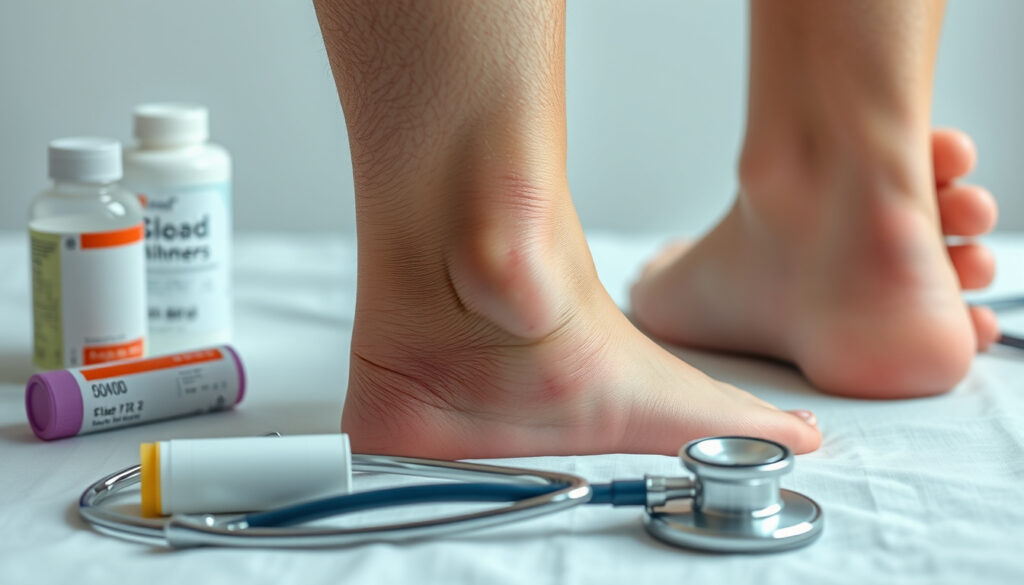
Classic blood clot in leg symptomsblood clot in leg symptoms like unilateral swelling, pain, and warmth often signal deep vein thrombosis needing urgent care.
Frequently asked questions
What are the five warning signs of a blood clot?
The most common warning signs: swelling in one leg (usually just one side), pain or tenderness in the calf that worsens with walking, warmth in the affected leg, redness or discoloration, and visible veins near the skin surface. If you have these symptoms after surgery or prolonged immobility, contact a doctor the same day.
What is the survival rate of a blood clot in the leg?
With prompt treatment, most people recover fully from a DVT. The survival rate depends on individual factors including age, overall health, how quickly treatment started, and whether complications like pulmonary embolism develop. The key number to know: the highest risk for PE is in the first few days after symptoms start, which is why early treatment is critical.
How do you know if you have a blood clot?
Signs to watch for: one swollen leg (asymmetric swelling), calf pain that feels like cramping or soreness, warmth in one leg compared to the other, and redness or darkening of the skin. DVT symptoms can feel like a pulled muscle, but they don’t improve with rest. An ultrasound ordered by your doctor is the only way to confirm a DVT.
How long do you stay in the hospital for a blood clot in the leg?
Many DVT cases are managed without a hospital stay — treatment often starts in the clinic or emergency department, and you go home the same day with medication. Hospital admission is more likely if you have severe symptoms, a large clot, other health conditions, or signs of pulmonary embolism. Your doctor determines this based on your specific situation.
What are the 10 signs of a blood clot in your leg?
The most frequently reported signs: (1) swelling in one leg, (2) calf pain or tenderness, (3) leg warmth, (4) redness or discoloration, (5) visible surface veins, (6) skin that feels tight or shiny, (7) pain that worsens when standing or walking, (8) leg fatigue or heaviness, (9) low-grade fever, and (10) tenderness along the inside of the thigh (for thigh-level clots). Not all signs appear in every case — swelling and pain are the most common.
When to go to the hospital for a blood clot in the leg?
Go to the emergency room immediately if you have any of these alongside leg symptoms: chest pain, shortness of breath, coughing blood, rapid heart rate, lightheadedness, or fainting. These suggest a pulmonary embolism. For leg symptoms alone (swelling, pain, warmth) without PE signs, call your doctor the same day for an urgent ultrasound — don’t wait for a regular appointment.
What are the 4 stages of a blood clot?
Medical literature doesn’t define four formal “stages,” but DVT progression follows a general pattern: (1) clot formation — blood pools and a clot begins, often in the calf veins; (2) acute phase — symptoms appear (swelling, pain, warmth), highest PE risk in days 1–3; (3) organization — clot stabilizes and begins to break down as anticoagulants work, usually weeks 2–8; (4) resolution and sequelae — the clot either dissolves over months or leaves residual vein damage (post-thrombotic syndrome). The key takeaway: treatment at any stage helps, but earlier is always better.
More related posts
 Sean Combs The Reckoning – Charges, Timeline and Verdict
 Must Have Ideas UK: Ownership, Delivery & Customer Reviews
 Cost of Living Crisis UK 2025: Is It Still Ongoing?
 Gaming Realms Share Price – Latest Price, History & News
 Bilete de Avion Ieftine: Best Sites Compared
 Kids Shoe Size Chart – UK Guide with EU CM Conversions
 What Is Good Friday – Solemn Tradition Explored
 Garden Tower Defense Codes – Fast Rewards & Easy Upgrades