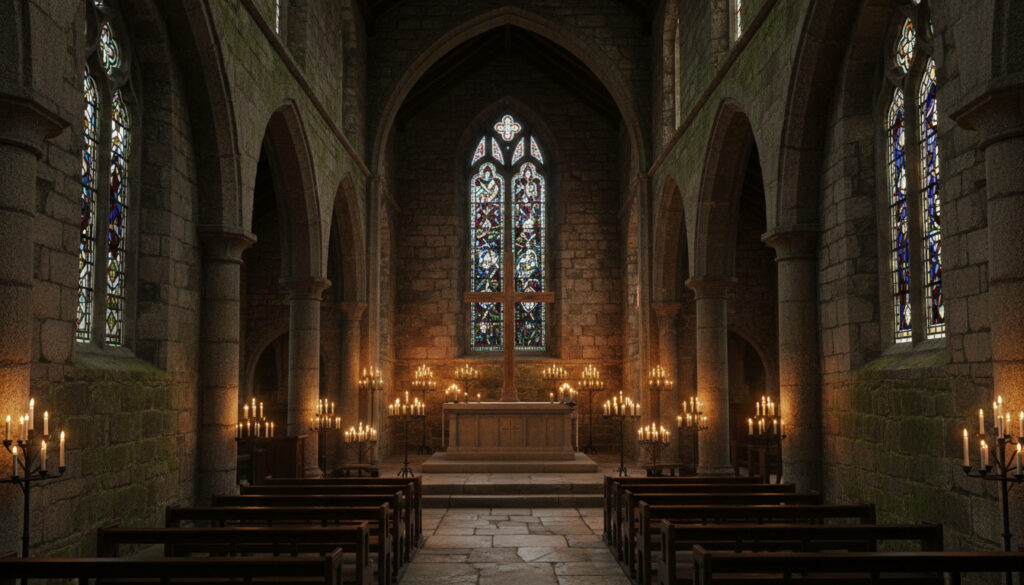
What Is Good Friday – Solemn Tradition Explored
Good Friday stands as one of the most solemn days in the Christian calendar, observed during Holy Week to remember the crucifixion and death of Jesus Christ. Its commemorations bring together ancient traditions and contemporary practices worldwide.
Marked by rites of mourning and reflection, Good Friday precedes Easter Sunday and carries deep significance for believers across Catholic, Orthodox, Protestant, and other Christian communities. The day’s observances extend from fasting and silent prayer to processions, ritual readings, and unique cultural customs.
Varying in expression but unified in purpose, Good Friday’s ceremonies bridge heritage and renewal, offering space for sorrow and hope at the heart of Christianity’s narrative.
What is Good Friday and What Does It Mean?
- Commemorates the crucifixion and death of Jesus Christ at Calvary.
- Central to Christian beliefs on sacrifice and redemption.
- Observed by multiple denominations through fasting, services, and unique rituals.
- Falls on the Friday preceding Easter, serving as a focal point in Holy Week.
- Cultural observances vary greatly, reflecting rich global diversity.
- No Eucharistic celebration on this day in many traditions.
- Marked by the Three Hours’ Agony, Passion readings, and the Veneration of the Cross in various rites.
| Aspect | Detail |
|---|---|
| Date Observed | Varies annually; determined by the lunar calendar |
| Religious Significance | Commemorates the crucifixion of Jesus Christ |
| Common Practices | Fasting, processions, and reflective services |
| Following Event | Easter Sunday |
| Main Rites | Stations of the Cross, Three Hours’ Agony, Veneration of the Cross |
| Participating Traditions | Catholic, Orthodox, Lutheran, Anglican, Methodist, Reformed |
| Typical Service Tone | Solemn, reflective, often ending in silence |
| Liturgical Colors | Black or red, with veiled altars and crosses |
Why is Good Friday Important?
Good Friday’s importance is anchored in Christian theology, marking the moment of Christ’s crucifixion as an act of redemptive sacrifice for humanity. This day, rooted in Scripture and tradition, sets the stage for the anticipation of resurrection on Easter Sunday.
Religious Context and Spiritual Meaning
Scriptural accounts detail Jesus’s final hours—his arrest, trial, suffering, and crucifixion at Calvary. Christians interpret this as the ultimate demonstration of love and atonement, offering forgiveness to all. The somber mood and rituals underscore the gravity and hope contained within the Passion story. Many denominations, including Catholic, Anglican, Mennonite, Methodist, and Orthodox, build their observances upon these events and meanings (BBC Religions – Good Friday).
Centrality in Holy Week
Falling on the Friday before Easter, Good Friday blends sorrow for the crucifixion with anticipation for resurrection. Its place within Holy Week creates a dramatic arc—beginning with the Last Supper and culminating in Easter’s celebration of new life.
The title “Good Friday” is understood not as “happy,” but as “holy” or “pious,” reflecting the belief in Christ’s sacrifice as a moment of cosmic significance and ultimate good, despite its sorrowful aspects (Encyclopedia Britannica – Good Friday).
The History and Origins of Good Friday
Historical traces of Good Friday begin with early Christians in Jerusalem, eventually formalizing observances in the 4th century after the Edict of Constantine. According to records, early commemorations centered on pilgrimages and readings from the Passion narratives (The Origins and Practices of Holidays: Good Friday).
Early Observance and Evolution
By the second century, Christian communities marked the events surrounding Jesus’s crucifixion with communal prayer and fasting. The term “Good Friday” is believed to derive from Old English or the idea of “God’s Friday,” although exact etymological origins remain debated.
Development of Rituals
The evolution of Good Friday customs accelerated as the Roman Empire recognized Christianity. Formal liturgical practices arose—including the Stations of the Cross and Passion readings—which link present-day services to those early beginnings. Over centuries, these elements became integrated into Holy Week liturgies across Christian denominations (History Channel – The History of Good Friday).
The Three Hours’ Agony—observed from noon to 3 p.m.—mirrors the timeline described in the Gospels for Christ’s crucifixion and death, and remains a core Good Friday practice for Catholics, Anglicans, Lutherans, and Methodists.
How is Good Friday Observed Around the World?
Good Friday observances vary sharply by culture, country, and denomination. Traditions range from silent processions and prayer vigils to reenactments and unique local customs, all centering on mourning and remembrance of Christ’s passion.
Christian Denominational Practices
The Catholic tradition often includes the Stations of the Cross and the Veneration of the Cross, while refraining from a full Eucharistic celebration. Anglican, Lutheran, and Methodist churches incorporate readings, prayers, hymns, and periods of silence. In the Eastern Orthodox Church, observance begins on Thursday evening and features the Matins of the Twelve Passion Gospels, solemn processions, and the ritual of the Epitaphios representing Christ’s burial.
Global Cultural Expressions
Geographical variations further enrich the tapestry of Good Friday. In Bermuda, kite flying symbolizes Jesus’ ascension. Jerusalem’s Via Dolorosa attracts pilgrims retracing Christ’s final path. Moravian communities clean gravestones in memory of the departed on this day. Methodists may drape altars in black, while Western European nations hold elaborate processions and Passion plays.
Eastern Orthodox and Byzantine Christians begin rituals Thursday night, continuing through Friday with lengthy scripture readings, extinguishing candles, and acts of sorrow, emphasizing Christ’s journey to the cross in their unique liturgical patterns.
Modern Adaptations and Public Participation
Contemporary expressions include live Passion plays in London, Way of the Cross processions at Rome’s Colosseum, and meditations before wooden crosses in churches and public spaces. These adaptations both preserve and transform ancient customs, drawing broader community involvement and connecting Good Friday’s message to modern experience.
Further detail on denominational and cultural variations can be found in the comprehensive overview at Good Friday.
- Early Christian origins and the establishment of Good Friday observance: The recognition of Christ’s crucifixion as a pivotal event led to annual commemorations by the second century. [source]
- Medieval practices and evolution of ritualistic observances: By the Middle Ages, processions, Passion readings, and liturgical prayers became widely instituted across Europe. [source]
- Modern interpretations and global variations in celebration: Contemporary adaptations feature Passion plays, public holidays, and regional customs such as kite-flying and grave cleaning. [source]
What Do We Know for Certain About Good Friday?
| Established Information | Unclear or Variable Information |
|---|---|
| Rooted in the Passion accounts of the Gospels | Exact origins of the term “Good Friday” |
| Formal observance established by the 4th century | Variations in early local practices |
| Observed globally by all major Christian denominations | Details of initial Jerusalem pilgrimages |
| Includes fasting, services, and commemorative rituals | Some liturgical variations not fully documented |
| Celebrated on the Friday before Easter | Regional customs have developed independently over centuries |
What Is the Broader Context and Meaning of Good Friday?
The theological core of Good Friday is drawn from the Christian belief in salvation through sacrifice, as depicted in the Passion narratives. Scriptural references—primarily from the Gospels of Matthew and John—anchor the day’s meaning in the broader movement of Holy Week.
Traditions have evolved to incorporate both ancient rituals and local expressions, reflecting ongoing dialogue between established doctrine and cultural adaptation. Modern debates continue around the historicity of certain events, but the central narrative of sacrifice remains widely accepted across denominations.
Regional customs—from kite flying in Bermuda to candlelit processions in Jerusalem—demonstrate how Good Friday’s message resonates globally, adapting while retaining its profound significance.
Which Sources Provide Authority on Good Friday?
Sacred texts such as the New Testament’s Passion accounts remain authoritative and foundational for Good Friday’s significance within Christianity.
The Bible and canonical Christian texts
The roots and evolution of Good Friday observance are further explored through historical records and scholarly analyses published in religious studies journals.
Religious studies journals and historical records
How Can the Meaning and Observance of Good Friday Be Summed Up?
Good Friday endures through tradition and transformation alike, standing at Christianity’s heart as a day of mourning, hope, and communal reflection. For broader perspectives and more detailed analysis, see The Origins and Practices of Holidays: Good Friday.
Frequently Asked Questions
What is Good Friday?
Why do Christians observe Good Friday?
How is Good Friday celebrated in different regions?
What historical events led to the establishment of Good Friday?
How does Good Friday relate to the overall Holy Week?
More related posts
 The Princess Diaries: Princess Andre’s Reality Show Guide
 Property for Sale Fife – 2025 Prices, Trends & Hotspots
 Anthony Edwards: NBA Star vs Actor – Height, Injury, Bio
 Houses for Sale Clydebank: Types, Prices & Buyer Guide
 Horses for Sale Near Me: Cheap & Local Irish Listings
 Porsche Macan for Sale – 5-Year Costs and Buying Guide
 Open a Business Bank Account – Steps, Requirements, Best Banks
 DJI Action 5 Pro – Robust Camera for Content Creators