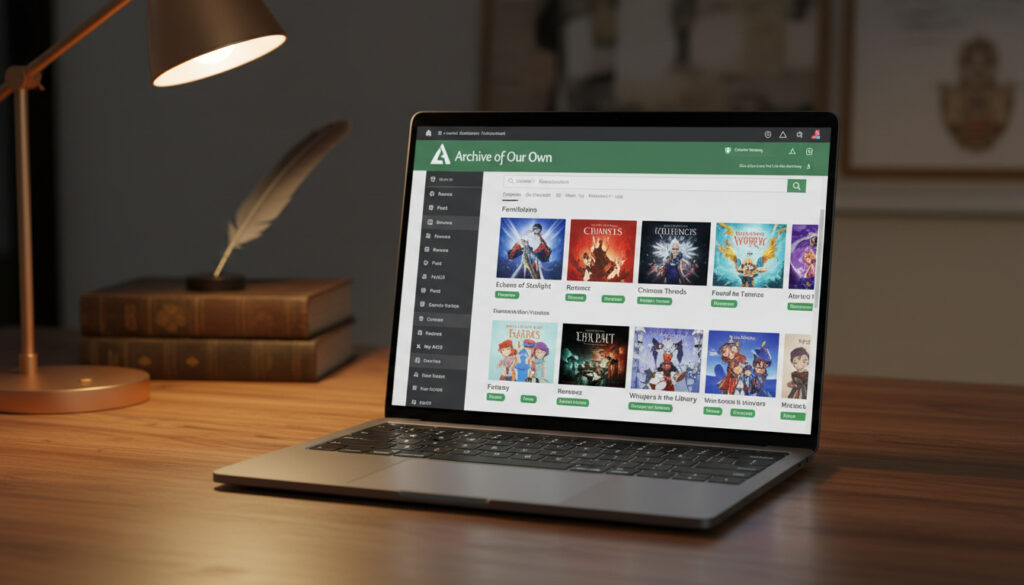
Archive of Our Own – What It Is, How to Use and Safety Guide
Archive of Our Own, commonly abbreviated as AO3, functions as a multi-fandom, nonprofit archive for transformative fanworks. Operated by the Organization for Transformative Works, the platform hosts millions of works including fanfiction, fanart, and podfic, serving communities ranging from classic literature enthusiasts to fans of contemporary franchises.
Established in 2007 as a direct response to commercial threats against fan-created content, AO3 entered open beta in November 2009 and has since evolved into an award-winning cultural institution. The platform maintains an explicit commitment to preserving all forms of fan expression under fair use principles while implementing user protection features against harassment and unauthorized data scraping.
What is Archive of Our Own?
Multi-fandom fanworks archive
Nonprofit Organization for Transformative Works
Open beta November 14, 2009
Over ten million works hosted
- Recipient of the 2019 Hugo Award for Best Related Work
- Permits controversial content including real person fiction and underage material with mandatory tagging
- Implemented comment blocking and user muting features between 2022 and 2023
- Faced significant AI scraping concerns in December 2022, prompting technical countermeasures
- Currently blocked in Russia as of April 2023
- Supports internationalization initiatives for underrepresented language fandoms
- Maintains comprehensive Open Doors program to rescue content from defunct archives
| Fact | Details |
|---|---|
| Founded | Proposed May 17, 2007; Open beta November 14, 2009 |
| Operator | Organization for Transformative Works (OTW) |
| Legal Status | Nonprofit, noncommercial entity |
| Works Count | 10 million+ (as of October 2022) |
| Content Types | Fanfiction, fanart, fan videos, podfic |
| Recognition | Hugo Award for Best Related Work (2019) |
| Access | Global (restricted in Russia since April 2023) |
| Key Architecture | Comprehensive hierarchical tagging system |
How to Use Archive of Our Own (AO3)
Account Creation and Navigation
Users obtain accounts through an invitation queue system or distributed beta codes. Once registered, account holders gain access to personalized dashboards, reading histories, and notification systems for tracking updates from specific creators or fandoms. The platform provides filtering tools that allow readers to exclude specific tags, ratings, or content warnings according to individual preferences.
Publishing and Tagging Protocols
Authors upload text-based works using AO3’s documentation system, which supports rich formatting and chaptered stories. The mandatory tagging architecture requires creators to label fandoms, relationships, characters, and content warnings, enabling precise content discovery. Users may also organize works into series or collections, including participation in seasonal gift exchanges like Yuletide. The platform allows embedding of multimedia content though full video hosting remains limited.
Since September 2019, co-creator additions require explicit approval from invited collaborators to prevent unauthorized attribution. Creators can also opt out of receiving gift works entirely as of February 2022, providing control over unsolicited additions to their portfolios.
Is Archive of Our Own Safe?
Content Boundaries and Warnings
AO3 operates under a comprehensive content policy designed to archive all transformative works while respecting legal boundaries. The platform permits explicit material, real person fiction (RPF), and underage content provided authors utilize the archive’s mandatory rating and warning systems. This approach prioritizes the preservation of fan cultural history while empowering readers to filter content through extensive exclusion tools.
User Protection Mechanisms
Recent platform updates have significantly enhanced safety features. June 2022 introduced comment blocking capabilities allowing creators to prevent specific users from engaging with their works. February 2023 expanded these protections with a muting function enabling users to hide all content from selected creators. These tools complement existing kudos and bookmarking privacy settings.
Russian authorities blocked access to AO3 in April 2023, rendering the archive inaccessible without circumvention tools for users within that jurisdiction. The Organization for Transformative Works continues to monitor the situation while maintaining outreach to international user communities.
History and Popularity of AO3
Origins and Founding Crisis
AO3 emerged from a specific threat to fan autonomy. On May 17, 2007, user Astolat proposed the archive following the launch of FanLib, a commercial startup attempting to profit from fanfiction. Concerns about corporate exploitation of free fan labor catalyzed rapid community mobilization. Rebecca Tushnet registered the archiveofourown.org domain on May 30, 2007, and development proceeded through the LiveJournal community fanarchive. The explicit nonprofit structure ensured that fanworks would remain under community control rather than commercial ownership.
Growth Trajectories and Cultural Impact
The archive entered open beta on November 14, 2009, with Yuletide 2009 serving as the first major test of the collections infrastructure. Growth accelerated dramatically in 2018 when Chinese fanwriters migrated to the platform following the imprisonment of danmei author Tianyi. By October 2022, the archive housed over ten million works spanning diverse interests from Map of Middle Earth communities to contemporary media fandoms.
In 2019, Archive of Our Own received the Hugo Award for Best Related Work, marking the first time a fanfiction archive received this prestigious literary honor. This recognition acknowledged the platform’s role in preserving and promoting transformative fiction traditions.
How Has AO3 Developed Over Time?
- : Astolat proposes AO3 in response to FanLib’s commercial model
- : Domain registration by Rebecca Tushnet
- : Archive enters open beta with invitation system
- : Yuletide 2009 tests collections functionality
- : OTW Board votes to permit meta essays and fandom nonfiction
- : Platform reaches three million fanworks
- : Hugo Award won for Best Related Work
- : Archive reaches ten million fanworks
What Are the Verified Facts About AO3?
Established Information
- Registered nonprofit status under OTW
- Open beta commenced November 14, 2009
- Hosts over ten million transformative works
- Technical measures implemented against AI scraping in 2022
- Explicit content permitted with mandatory warnings
- Russian accessibility blocked since April 2023
Unclear or Pending
- Current total active registered user count
- Specific operational budget or donation revenue figures
- Definitive policy on AI-generated fanfic content
- Timeline for expanded multimedia hosting capabilities
- Resolution of ongoing geopolitical access disputes
What Role Does AO3 Play in Fandom?
AO3 functions as critical infrastructure for digital fan culture, operating under a nonprofit model that distinguishes it from commercial alternatives. The Organization for Transformative Works maintains the archive alongside the Open Doors project, which rescues fanworks from failing or defunct platforms. This preservation mission ensures that decades of fan creative output remain accessible regardless of corporate ownership changes or platform obsolescence.
The archive’s tagging taxonomy has influenced fan organizational practices across the internet, standardizing how communities categorize relationships and content types. From mainstream superhero franchises to specific literary adaptations like The Hunger Games The Ballad of Songbirds & Snakes, the platform accommodates diverse creative expressions. The OTW’s legal advocacy work extends beyond hosting, actively defending transformative works under fair use doctrines.
What Sources Document AO3’s Development?
“A fan-created, fan-run, nonprofit, noncommercial archive for transformative fanworks, like fanfiction, fanart, fan videos, and podfic.”
— Organization for Transformative Works mission statement, documented via Fanlore
The proposal generated significant discussion within fandom communities concerned about commercial exploitation of fan-created works.
— Fanlore documentation regarding May 2007 founding discussions
What Defines the Archive of Our Own Experience?
Archive of Our Own represents a unique experiment in community-controlled digital infrastructure, balancing comprehensive archival goals with evolving user safety mechanisms. The platform hosts everything from mainstream fiction to controversial transformative works, supported by international volunteer efforts rather than commercial investment. As AO3 continues addressing emerging challenges including AI scraping and geopolitical censorship, it remains fundamentally shaped by its 2009 origins as a bulwark against the commodification of fan labor.
Common Questions About AO3
How do you delete an AO3 account?
Users must submit a deletion request directly to Archive of Our Own support staff, as the platform does not provide automated account deletion through user settings.
Is AO3 free to use?
Yes, the service operates entirely on donations to the Organization for Transformative Works, with no fees for account creation, content hosting, or access to archived works.
Can anyone post fanfiction on AO3?
Posting requires an account distributed through an invitation queue system designed to manage server capacity, though the platform generally provides access to all requesters within reasonable timeframes.
Does AO3 allow adult or explicit content?
The archive permits explicit, mature, and controversial content provided authors apply appropriate ratings and archive warnings, enabling readers to filter content according to personal preferences.
Is content on AO3 legal?
The archive operates under fair use principles as a nonprofit transformative works repository, though individual works may face legal scrutiny depending on copyright status and specific jurisdictional interpretations.
More related posts
 When Is Budget 2025 – Fiscal Milestones And Updates
 Sophie Raworth: Biography, Husband, Salary, and Illness
 Cast of Sharpe TV Series: Full List, Roles & Trivia
 What Century Are We In Now? 21st Century (2001-2100)
 Open a Business Bank Account – Steps, Requirements, Best Banks
 We Didn’t Start the Fire Lyrics – Full Text, Meaning and History
 Must Have Ideas UK: Ownership, Delivery & Customer Reviews
 When’s the Next Bank Holiday in Ireland? 2026 Dates Guide