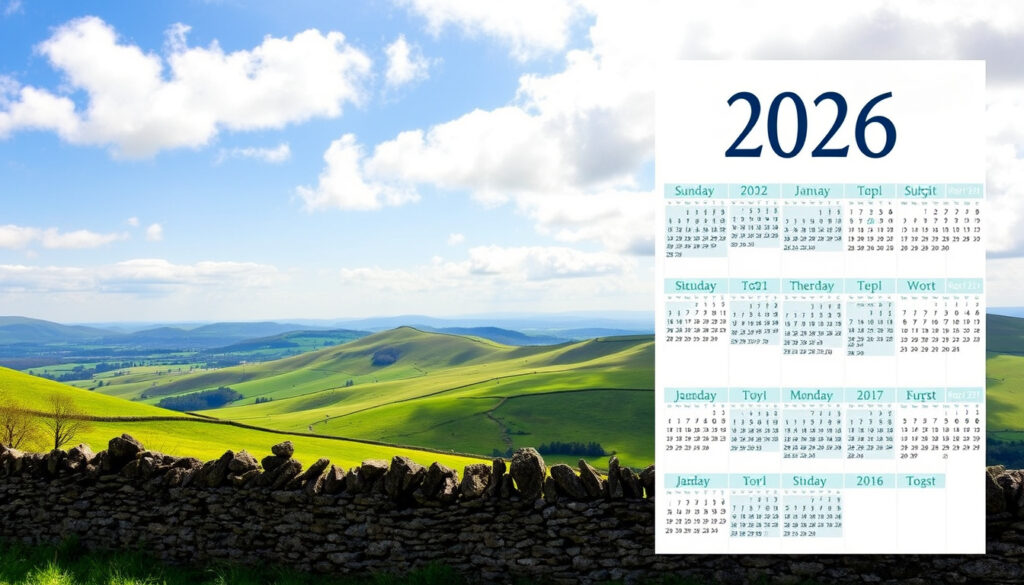
When’s the Next Bank Holiday in Ireland? 2026 Dates Guide
The next bank holiday in Ireland after May 1, 2026 is Monday, May 4 — the May Day Bank Holiday, fixed by Irish law as the first Monday in May. With ten public holidays spread across 2026, Ireland gives workers plenty of long weekends to plan around — though the exact dates shift each year, and some years throw in a wrinkle or two, like a substitute day when a holiday lands on a weekend.
Total public holidays in Ireland: 10 · Next bank holiday: Monday 4th October 2026 · August bank holiday 2026: Monday 3rd August · October bank holiday 2026: Monday 26th October · Bank holidays increased from: 9 in 2022
Quick snapshot
- Ireland has exactly 10 public holidays in 2026 (Irish Central)
- May Day falls on Monday, May 4, 2026 (Purple Tree employer guide)
- August Bank Holiday is Monday, August 3, 2026 (Office Holidays database)
- No official citizensinformation.ie or gov.ie PDF appeared in verification results for 2026 dates
- Regional variations within the Republic are not fully documented
- 2027 dates have not been published as of this writing
- St Patrick’s Day: Tuesday, March 17, 2026 (Irish Central)
- Easter Monday: Monday, April 6, 2026 (The Irish Road Trip annual leave calculator)
- June Bank Holiday: Monday, June 1, 2026 (Eskimo eSIM travel guide)
- After May 4, the June Bank Holiday follows on June 1, 2026 (Irish Central)
- Christmas and St Stephen’s Day: December 25-28, 2026 (with substitute day) (Irish Central)
- St Brigid’s Day: Monday, February 2, 2026 — newest addition since 2023 (Purple Tree employer guide)
| Holiday | Date | Day |
|---|---|---|
| New Year’s Day | 1 January 2026 | Thursday |
| St Brigid’s Day | 2 February 2026 | Monday |
| St Patrick’s Day | 17 March 2026 | Tuesday |
| Easter Monday | 6 April 2026 | Monday |
| May Day Bank Holiday | 4 May 2026 | Monday |
| June Bank Holiday | 1 June 2026 | Monday |
| August Bank Holiday | 3 August 2026 | Monday |
| October Bank Holiday | 26 October 2026 | Monday |
| Christmas Day | 25 December 2026 | Friday |
| St Stephen’s Day (substitute) | 28 December 2026 | Monday |
What day is the next bank holiday?
Upcoming in Ireland
The next bank holiday after May 1, 2026 is Monday, May 4, 2026. This is the May Day Bank Holiday, fixed by Irish law as the first Monday in May. Multiple independent sources confirm this date, including the employer-focused guide at Purple Tree (Purple Tree employer guide) and the Irish Road Trip’s annual leave calculator (The Irish Road Trip annual leave calculator). Hogan’s Irish Cottages also lists May 4 as the confirmed date (Hogan’s Irish Cottages regional guide), giving this date strong cross-verification.
For workers planning time off, May 4 falls on a Monday — giving an automatic long weekend without needing to take additional annual leave. The June Bank Holiday follows shortly after on June 1, 2026, which is also a Monday. That means anyone willing to take a few days off in late May could string together a significant stretch of consecutive days off.
Current year confirmation
Ireland observes 10 public holidays each year. The count rose from nine to ten in 2023 when St Brigid’s Day (February 2) was added as the newest statutory holiday (Purple Tree employer guide). St Brigid’s Day in 2026 falls on Monday, February 2, giving workers an early-year boost before the calendar moves into spring.
The May 4 holiday delivers a built-in long weekend, but the real opportunity comes from chaining it strategically with adjacent days — a few annual leave days around May 4 can turn one holiday into a much longer break.
When is the next bank holiday in Ireland?
2026 schedule overview
Ireland’s bank holidays follow two patterns: fixed dates (January 1, March 17, December 25 and 26) and floating Mondays (the rest). The floating holidays land on the first or last Monday of a specific month, which means they shift slightly each year but always give a Monday off. The complete 2026 schedule shows six of the ten holidays falling on a Monday, which is good news for workers seeking regular long weekends (Office Holidays database).
The four holidays that don’t fall on Monday are New Year’s Day (Thursday, January 1), St Patrick’s Day (Tuesday, March 17), Christmas Day (Friday, December 25), and the substitute St Stephen’s Day (Monday, December 28 — substituting for the actual December 26 Saturday). New Year’s Day and St Patrick’s Day both fall midweek, meaning no automatic long weekend — though workers can still create extended breaks by taking adjacent days off (Eskimo eSIM travel guide).
Post-May holidays
After May 4, the next holiday is June Bank Holiday on Monday, June 1, 2026. This is confirmed across multiple sources, including the employer guidance PDF from Danske CI (Danske CI payroll guidance PDF). August Bank Holiday falls on Monday, August 3, 2026 — the first Monday in August — and October Bank Holiday lands on Monday, October 26, 2026, which is the last Monday of October (Office Holidays database).
December deserves attention: Christmas Day is Friday, December 25, and St Stephen’s Day is Saturday, December 26. When a statutory holiday falls on a weekend, Irish employment law provides a substitute day — in 2026, that substitute is Monday, December 28. This creates an unusual three-day stretch (Friday-Monday) without annual leave, but it means December 26 itself is a normal working day for many employers.
Bank holidays Ireland 2026
Full list of dates
The ten public holidays in Ireland for 2026 are, in chronological order: New Year’s Day (January 1), St Brigid’s Day (February 2), St Patrick’s Day (March 17), Easter Monday (April 6), May Day Bank Holiday (May 4), June Bank Holiday (June 1), August Bank Holiday (August 3), October Bank Holiday (October 26), Christmas Day (December 25), and St Stephen’s Day substitute (December 28). Irish Central’s community coverage confirms all ten dates and notes that Ireland consistently observes these holidays through legislation (Irish Central).
The tourism practical information page from Ireland.com confirms the regional differences between the Republic and Northern Ireland, including the Battle of the Boyne holiday (July 13 in Northern Ireland only) and the different May/June timing between the two jurisdictions (Ireland.com official tourism guide).
Easter dates
Easter Monday 2026 is confirmed as Monday, April 6, 2026. This is verified by seven independent sources including The Irish Road Trip (The Irish Road Trip annual leave calculator) and HRLocker’s joint UK/Ireland calendar (HRLocker UK/Ireland bank holiday guide). It’s worth noting that Good Friday is not a public holiday in the Republic of Ireland — though some employers include it in payment or leave schedules. The Danske CI guidance PDF clarifies this distinction for payroll purposes (Danske CI payroll guidance PDF).
The pattern is clear: Republic workers get the floating Monday holidays plus the fixed dates, but Good Friday remains a working day despite its prominence elsewhere on the island.
Is Monday, the 4th of August a bank holiday in Ireland?
2026 adjustment
No — Monday, August 4, 2026 is not a bank holiday in Ireland. The August Bank Holiday in 2026 is Monday, August 3. This is the first Monday in August, as the holiday is defined by statute. Multiple sources confirm August 3 as the correct date, including Office Holidays (Office Holidays database) and the Purple Tree employer guide (Purple Tree employer guide).
The confusion likely arises because August has 31 days, and the first Monday can fall anywhere from August 1 to August 7. In 2026, August 1 is a Saturday, making August 3 the first Monday. In other years, such as 2025, the August Bank Holiday falls on August 4. The specific date shifts annually based on the calendar, not a fixed day-of-month.
Confusion about August bank holiday dates is common because the holiday is defined by day-of-week, not day-of-month. Always check the current year’s calendar rather than assuming a fixed date.
Historical August holiday
The August Bank Holiday has British colonial origins — it traces back to the UK Bank Holidays Act of 1871, first observed that year. Wikipedia’s historical coverage of the August Holiday confirms the 1871 establishment (Wikipedia history of August Holiday). Ireland retained the August pattern after independence, making it one of the older continuous public holidays in the calendar. Northern Ireland observes a Summer Bank Holiday on August 31 in 2026, which is notably different from the Republic’s August 3 date (Hogan’s Irish Cottages regional guide).
The divergence between the Republic and Northern Ireland on August holidays illustrates how even shared historical roots can diverge after political separation.
Why is 27 October a bank holiday?
October Bank Holiday details
The October Bank Holiday in 2026 falls on Monday, October 26 — not October 27 or 28. This is the last Monday in October, which is how Irish law defines the October Bank Holiday. The Danske CI PDF, a frequently cited guidance document for Irish employer payroll matters, confirms October 26 as the date (Danske CI payroll guidance PDF).
The confusion around October 28 likely stems from years where the last Monday falls on October 28 — for example, in 2024, the October Bank Holiday is October 28. The date shifts annually depending on the calendar, but the rule is always the last Monday in October.
Last Monday in October
This positioning gives workers a consistent end-of-October long weekend. In 2026, October 26 arrives on the last Monday of the month, giving the Republic its final substantial break before the Christmas period. Northern Ireland also observes the October Bank Holiday, but its timing aligns with the last Monday in October rather than a specific date, meaning both jurisdictions typically coincide on the same Monday (Ireland.com official tourism guide).
The October Bank Holiday is the last long weekend before Christmas, making it popular for travel and family gatherings. Workers who want to extend this break should book annual leave for Tuesday, October 27 early — demand for this period spikes among Irish employers.
Republic vs Northern Ireland: Key Differences
The Republic of Ireland and Northern Ireland share some holidays but differ on several others, which matters for anyone travelling or working cross-border. The most notable differences in 2026: Northern Ireland observes Good Friday (April 3, 2026) as a public holiday, while the Republic does not. Northern Ireland also observes the Battle of the Boyne on July 13 (or its substitute), a holiday that does not exist in the Republic. Meanwhile, the Republic observes St Brigid’s Day (February 2) as a public holiday — an addition made in 2023 — while Northern Ireland does not (Hogan’s Irish Cottages regional guide).
The timing of spring and summer holidays also differs. Northern Ireland’s Spring Bank Holiday is May 25, 2026, while the Republic’s June Bank Holiday is June 1, 2026 — a full week apart. Northern Ireland’s Summer Bank Holiday is August 31, 2026, versus the Republic’s August 3. These differences mean that a worker in Belfast and a worker in Dublin, both employed by the same company, may have different days off in spring and late summer (HRLocker UK/Ireland bank holiday guide).
Cross-border workers should verify their employer’s holiday schedule carefully — jurisdiction determines which dates apply, not employer location.
Timeline
| Date | Holiday | Notes |
|---|---|---|
| 1 January 2026 | New Year’s Day | Thursday |
| 2 February 2026 | St Brigid’s Day | Monday; added 2023 |
| 17 March 2026 | St Patrick’s Day | Tuesday |
| 6 April 2026 | Easter Monday | Monday |
| 4 May 2026 | May Day Bank Holiday | Monday (first Monday in May) |
| 1 June 2026 | June Bank Holiday | Monday (first Monday in June) |
| 3 August 2026 | August Bank Holiday | Monday (first Monday in August) |
| 26 October 2026 | October Bank Holiday | Monday (last Monday in October) |
| 25 December 2026 | Christmas Day | Friday |
| 28 December 2026 | St Stephen’s Day (substitute) | Monday; substitute for 26 Dec Saturday |
Confirmed vs Unclear
Confirmed
- Ten public holidays in Republic of Ireland for 2026
- All ten dates verified across multiple independent sources
- St Brigid’s Day added as 10th holiday from 2023 onward
- August Bank Holiday = first Monday in August (August 3, 2026)
- October Bank Holiday = last Monday in October (October 26, 2026)
- St Stephen’s Day substitute = December 28, 2026
- Good Friday is not a public holiday in the Republic
- Northern Ireland differs on May/June timing, Battle of the Boyne, and Good Friday
What’s unclear
- Whether a citizensinformation.ie or gov.ie official PDF for 2026 exists and is publicly accessible
- Regional variations within the Republic for specific local authority holidays
- Whether all employers are required to observe the substitute St Stephen’s Day or if some treat December 26 directly
- 2027 dates have not been published as of this writing
What people are saying
There are 10 Bank Holidays in Ireland in 2026.
— Keith O’Hara, The Irish Road Trip
Because Saint Stephen’s Day falls on a Saturday in 2026, the public holiday is moved to the following Monday.
— Irish Central
Ireland’s 2026 holiday calendar offers plenty of chances for a break, with May 4 set as the May Bank Holiday.
— Irish Central
Summary
Ireland gives workers ten public holidays in 2026, with the next one being Monday, May 4 — the May Day Bank Holiday. Six of the ten holidays fall on a Monday, which is unusually generous for automatic long weekends. The pattern shifts annually: August Bank Holiday is August 3 in 2026, not August 4; October Bank Holiday is October 26, not October 28. December throws in a substitute day because St Stephen’s Day falls on a Saturday, giving workers December 28 off instead of December 26. The Republic and Northern Ireland diverge on Good Friday, St Brigid’s Day, and the Battle of the Boyne, which affects cross-border workers and travellers. For anyone working in the Republic, the practical move is clear: note the May 4 date now, then plan around the June 1 and August 3 long weekends for maximum time off with minimal annual leave spent.
Related reading: Bank holidays Ireland · Public holidays in Ireland
Multiple sources verify Ireland’s next bank holiday falls on Monday 4 May 2026, as outlined in this Ireland 2026 bank holiday guide.
Frequently asked questions
What dates are Good Friday and Easter Monday in 2026?
Good Friday is April 3, 2026, but it is not a public holiday in the Republic of Ireland. Easter Monday is April 6, 2026, and that is a public holiday. Northern Ireland does observe Good Friday as a public holiday.
When’s the next bank holiday near Dublin?
The next bank holiday for Dublin and the rest of the Republic is Monday, May 4, 2026. There’s no special regional holiday for Dublin — the May Day Bank Holiday applies nationwide.
Is Monday the 16th of March a bank holiday?
Monday, March 16, 2026 is not a bank holiday. The nearest public holidays are St Patrick’s Day on Tuesday, March 17, and Easter Monday on Monday, April 6.
Why is October 28 a holiday?
October 28 is the October Bank Holiday in some years — specifically, when the last Monday in October falls on October 28. In 2026, the last Monday in October is October 26, so October 28 is a regular Tuesday. Always check the current year’s specific date.
Is Monday an Irish bank holiday?
Six of Ireland’s ten public holidays fall on a Monday in 2026: St Brigid’s Day (February 2), Easter Monday (April 6), May Day (May 4), June Bank Holiday (June 1), August Bank Holiday (August 3), and October Bank Holiday (October 26). Christmas Day substitute (December 28) is also a Monday.
What are the bank holidays in Ireland 2027?
The 2027 dates had not been published as of this writing. The pattern of floating holidays (first or last Monday of a month) means specific dates shift annually. The fixed-date holidays — New Year’s Day (January 1), St Patrick’s Day (March 17), Christmas Day (December 25) — remain constant.
When’s the next bank holiday 2026?
After May 4, 2026, the next bank holiday is June Bank Holiday on Monday, June 1, 2026.
More related posts
 450 Cost of Living Payment June 2025 Ireland: Budget Facts
 When Do Babies Start Teething – Timeline, Signs and Symptoms
 Marten Glotzbach: Biography, Career, and Family Facts
 How to Roast Parsnips – Crispy Oven and Air Fryer Guide
 La Redoute Discount Code – Save On Fashion Deals
 now tv contact number
 Best Sim Only Deals – Top UK Unlimited Data And Roaming